

Acne Scar Treatment in Singapore
Discover Personalised acne scar treatments for ice pick, boxcar scars and rolling scars
Introduction
Understanding Acne Scars
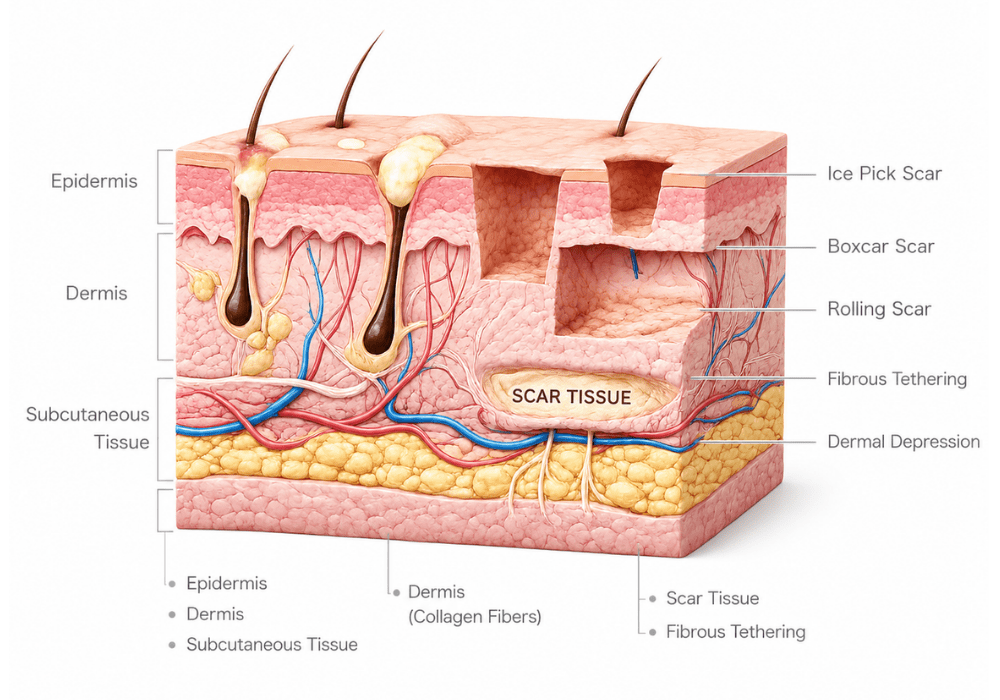
Acne scars develop when inflammation from acne disrupts the skin’s normal healing process, leading to changes beneath the surface of the skin. Depending on how the skin repairs itself, this can result in uneven texture, depressions, tethering or areas of collagen loss that remain visible even after active acne has resolved.
Because acne scars affect the skin at different structural levels, treatment is rarely one-dimensional. Effective acne scar treatment often requires a personalised approach based on the type of scarring, skin condition and overall treatment goals.
At The Aesthetic Studio Clinic, treatments are carefully tailored to address the underlying structural changes associated with acne scarring while supporting smoother, more refined-looking skin over time.
Acne Scar Types
Different Types of Acne Scars and How They Form
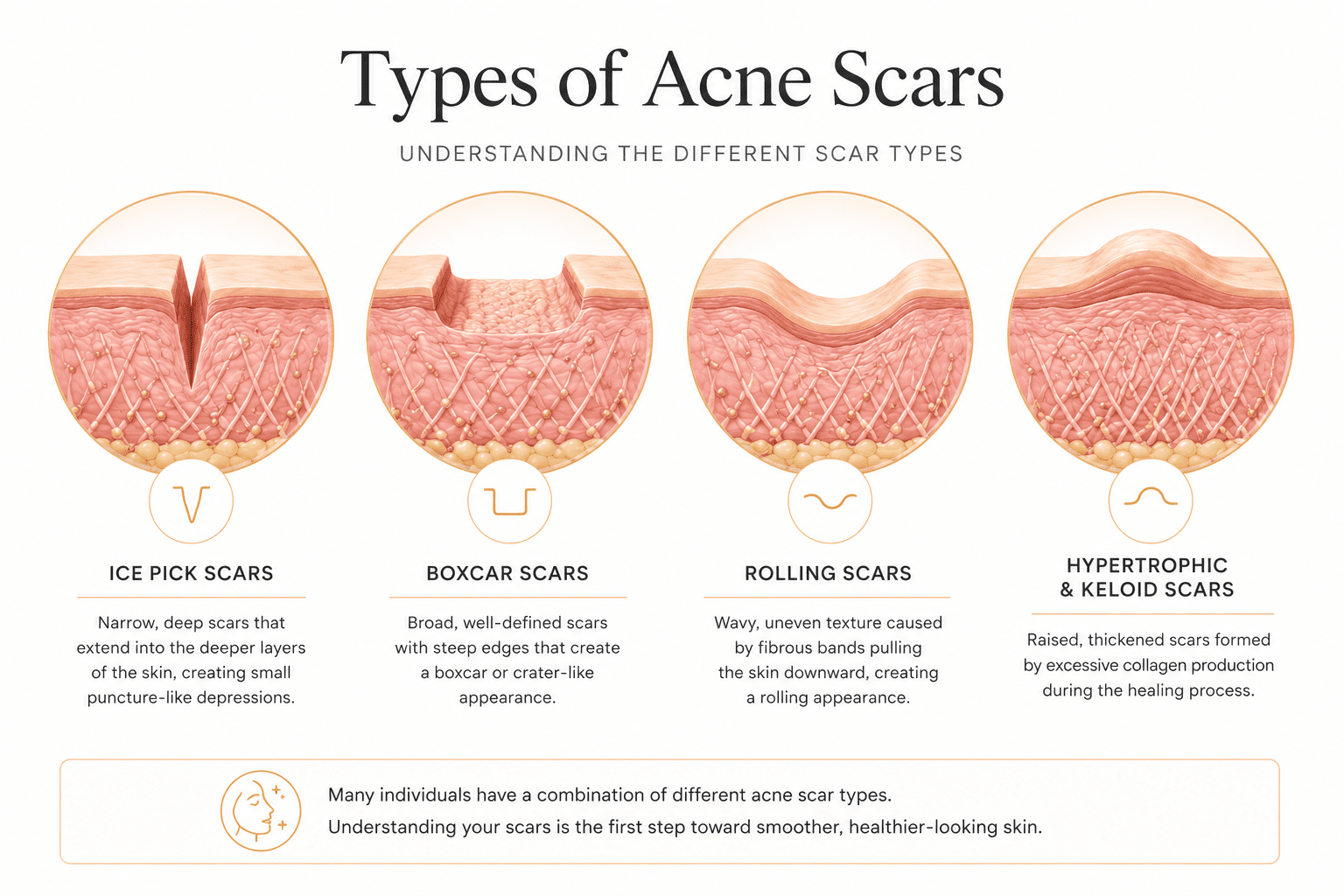
There are several different types of acne scars, each forming differently depending on the severity of inflammation, the depth of skin damage, and the way the skin heals after acne breakouts.
Some acne scars create depressed areas within the skin, while others may become raised or thickened due to abnormal collagen formation during the healing process.
The main acne scar types include ice pick scars, boxcar scars, rolling scars, and hypertrophic or keloid scars. These scars can contribute to uneven skin texture, visible depressions, and changes in overall skin smoothness.
Many individuals develop a combination of different scar patterns rather than a single acne scar type alone, which is why the appearance and severity of scarring can vary significantly from person to person.
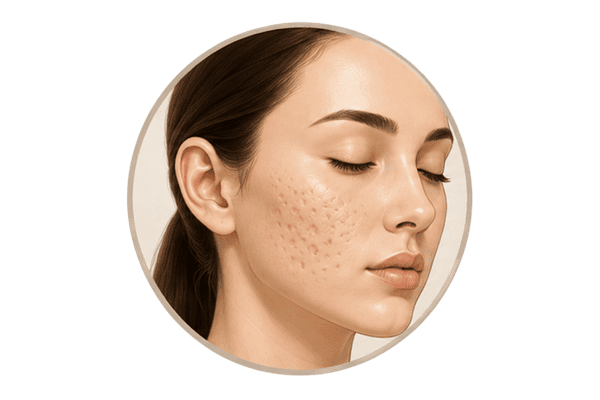
Ice Pick Acne Scars
Ice pick scars are deep, narrow atrophic acne scars that extend into the deeper layers of the skin, creating small puncture-like depressions on the surface. These acne scars are commonly associated with severe inflammatory acne and can significantly affect overall skin texture and smoothness.
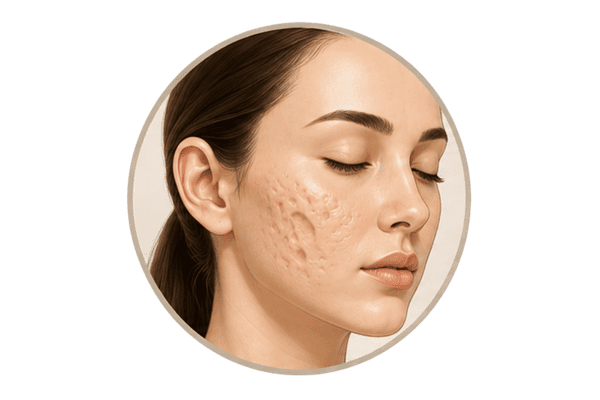
Boxcar Acne Scars
Boxcar scars are broader depressed acne scars with more defined edges, often creating a crater-like appearance within the skin. They develop when inflammatory acne damages collagen within the dermis, leading to visible loss of structural skin support and uneven skin texture.
Rolling Scars
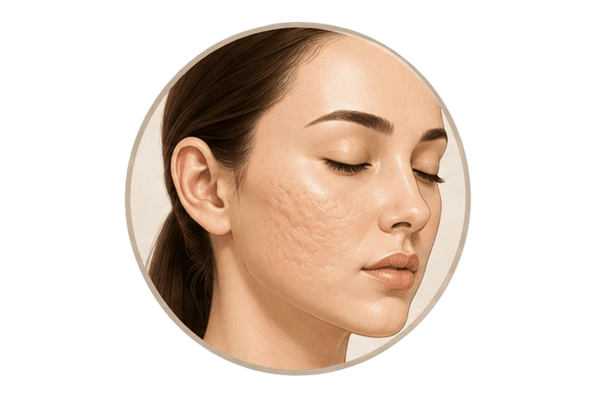
Rolling scars are a type of atrophic acne scar that create uneven, wave-like skin texture due to fibrous scar bands pulling the skin downward. These depressed acne scars often become more noticeable under lighting and can contribute to an overall rough or irregular skin surface.
Hypertrophic & Keloid Acne Scars
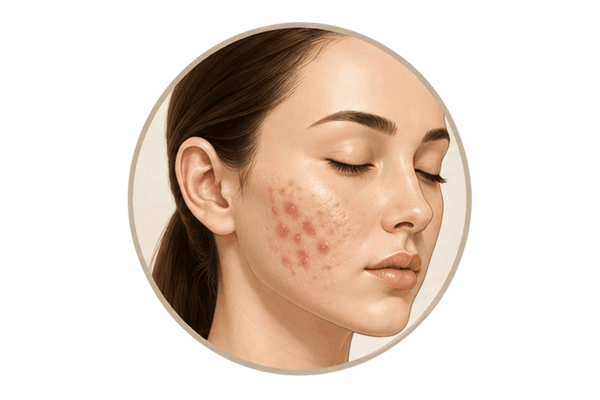
Hypertrophic and keloid scars are raised acne scars caused by excessive collagen production during the skin healing process. Unlike atrophic acne scars, these scars project above the skin surface and may continue to become thickened, firm, or prominent over time.
How It Works
How Acne Scar Treatments Work
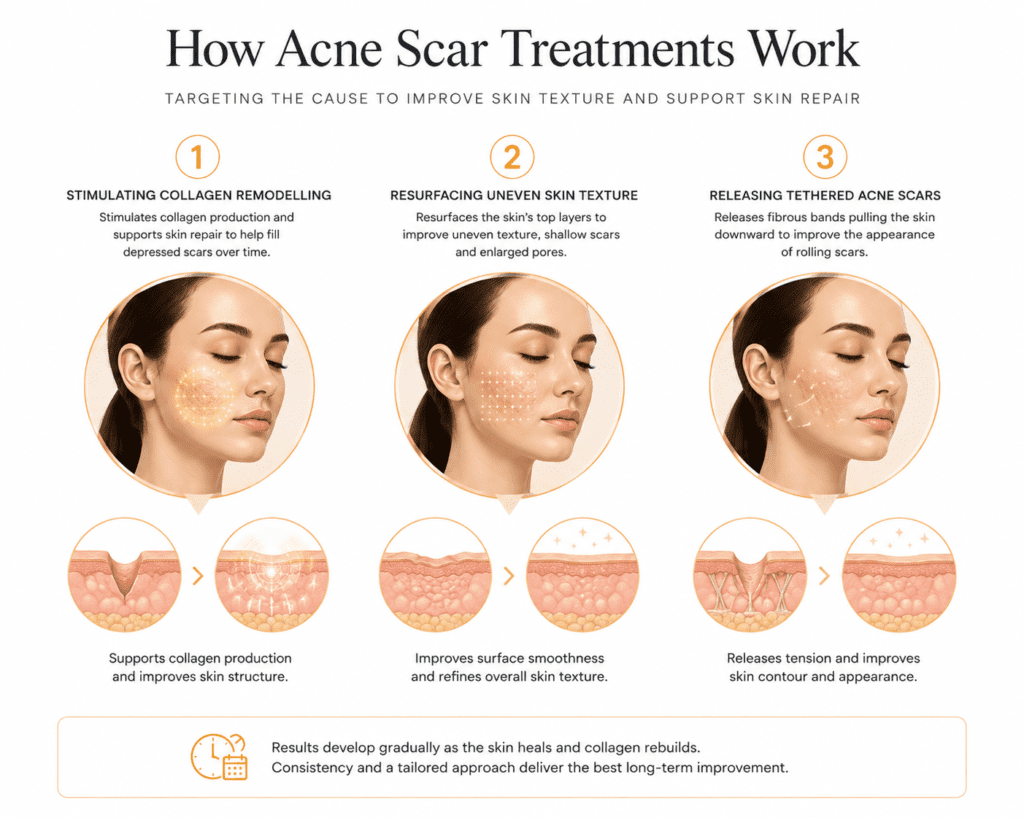
Acne scar treatments work by targeting the structural changes that develop beneath the skin following inflammation, collagen damage and abnormal wound healing from acne breakouts. Different acne scars form differently within the skin, which is why treatment approaches are often tailored according to the scar type and depth of scarring present.
Stimulating Collagen Remodelling
Some acne scars, such as boxcar scars and certain depressed scars, are associated with collagen loss beneath the skin. Collagen remodelling treatments help support skin repair and improve overall skin smoothness over time.
Resurfacing Uneven Skin Texture
Certain treatments focus on resurfacing the skin to improve uneven texture, superficial scar depressions and enlarged pores commonly associated with acne scarring.
Releasing Tethered Acne Scars
Rolling acne scars are often caused by fibrous bands tethering the skin downward beneath the surface. Structural scar release approaches help reduce this tethering effect to improve skin texture and contour.
Treatments
Acne Scar Treatment Options
TCA Cross
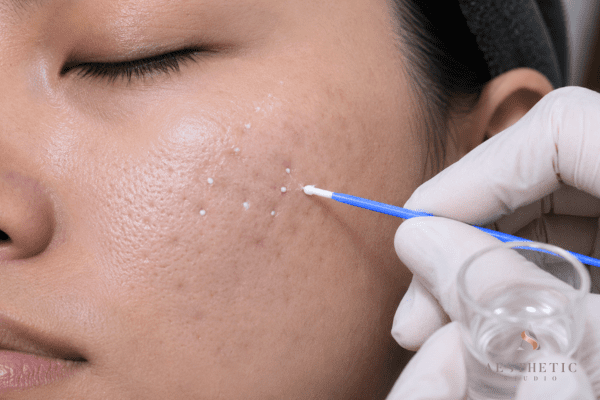
TCA Cross is commonly used for deep ice pick scars and focal acne scars that extend deeper into the skin. The treatment works by applying a controlled chemical reconstruction technique directly into the scar to stimulate localised collagen remodelling.
- Best for: Ice pick acne scars
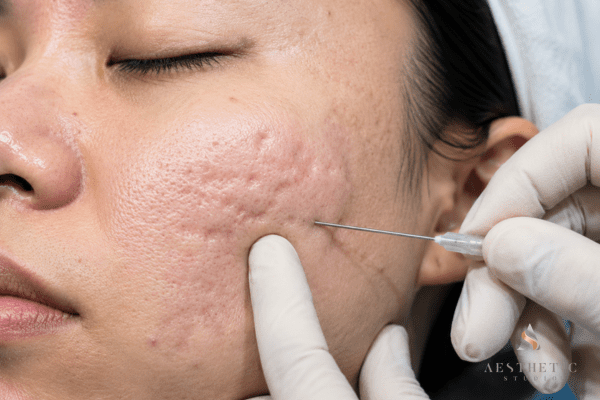
Subcision
Subcision is a structural scar release treatment commonly used for rolling acne scars caused by fibrous tethering beneath the skin. The treatment helps release these tethered attachments to improve skin smoothness and reduce visible acne scar depressions.
- Best for: Rolling acne scars
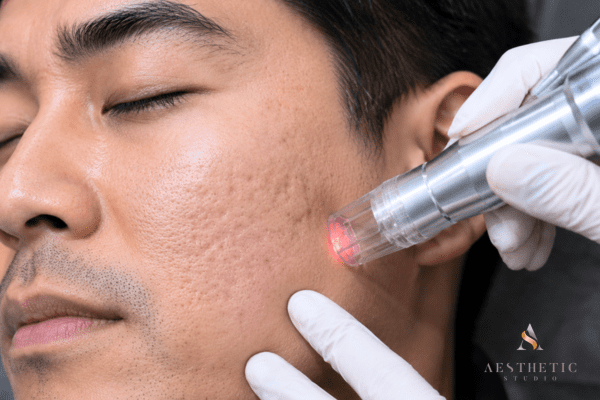
Fractional CO2 Laser
Fractional CO2 laser treatment helps resurface uneven skin texture while stimulating collagen remodelling within the skin. This treatment is commonly used for boxcar acne scars, superficial acne scarring and overall skin texture improvement.
- Best for: Boxcar acne scars
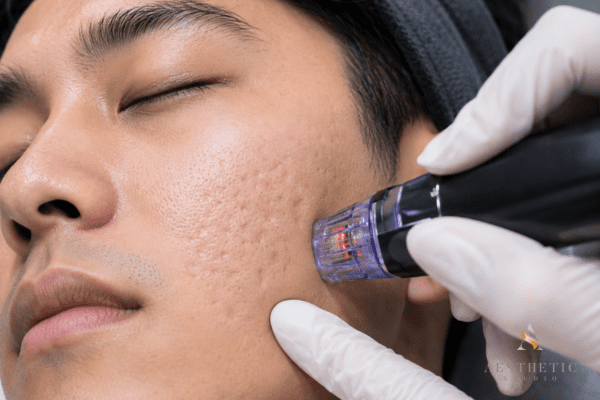
RF Microneedling
RF microneedling works by creating controlled micro-injuries within the skin to stimulate natural collagen remodelling and skin repair processes. It may help improve mild acne scarring, uneven skin texture and overall skin quality over time.
- Best for: Mild/superficial Acne Scars
FAQ
Frequently Asked Questions About Acne Scars
Can acne scars be permanently removed?
Acne scars can often be improved significantly, but complete “permanent removal” is not always realistic. Acne scars are caused by structural changes in the skin, such as collagen loss, tethering beneath the surface or abnormal wound healing after inflammation.
The goal of acne scar treatment is usually to improve skin texture, soften visible depressions and support collagen remodelling over time. Some scars may become much less noticeable, while deeper scars may require a series of treatments such as TCA CROSS, subcision, fractional CO2 laser or microneedling.
A personalised assessment is important because the outcome depends on your scar type, scar depth, skin condition and how your skin responds to healing.
What is the best treatment for acne scar?
There is no single best acne scar treatment for everyone because different acne scars form in different ways. Ice pick scars, boxcar scars and rolling scars each affect the skin differently, so the most suitable treatment depends on the scar type and depth.
For example:
- TCA Cross may be considered for deep ice pick scars
- Subcision may be used for tethered rolling scars
- Fractional CO2 laser may help with resurfacing and boxcar scars
- Microneedling may support collagen remodelling and texture refinement
In many cases, the best approach is not one treatment alone, but a carefully planned combination based on how your scars are structured.
Why do some acne scars need combination treatments?
Acne scars often affect more than one layer of the skin. Some scars involve surface texture irregularities, while others involve deeper collagen loss or fibrous tethering beneath the skin.
This is why one treatment may not address everything. For example, fractional CO2 laser can help resurface uneven texture, but rolling scars caused by tethering may need subcision to release the scar tissue first. Ice pick scars may require more targeted treatments such as TCA Cross because they are narrow and deep.
Combination acne scar treatments allow different components of scarring to be treated more comprehensively, leading to a more balanced improvement in skin texture over time.
How many sessions are needed for acne scar treatment?
Most acne scar treatments require multiple sessions because collagen remodelling happens gradually. The number of sessions depends on the scar type, scar severity, skin healing response and the treatments used.
Milder textural scarring may improve with fewer sessions, while deeper ice pick scars, rolling scars or mixed acne scars often require a staged treatment plan. Treatments such as TCA Cross, subcision, fractional CO2 laser and microneedling are usually performed over time to allow proper healing between sessions.
During consultation, our doctor will assess your scars and recommend a realistic treatment plan based on your skin and goals.
Can acne scars worsen with age?
Acne scars may appear more noticeable with age even if the scars themselves are not actively worsening. As collagen, elastin and facial volume gradually decline, the skin may become thinner and less supported, making depressed scars and uneven texture more visible.
Rolling scars and boxcar scars may also cast stronger shadows under certain lighting as skin laxity develops. This is why some people feel their acne scars look more obvious in their late 30s or beyond.
Acne scar treatment focuses on improving texture, stimulating collagen remodelling and supporting skin structure over time.
Is downtime expected after acne scar treatment?
Some downtime is expected after acne scar treatment, but it varies depending on the treatment performed. Microneedling may cause temporary redness and sensitivity, while fractional CO2 laser can involve more visible redness, peeling and recovery time.
TCA Cross may cause small areas of whitening, scabbing or darkening before healing, while subcision may cause swelling, bruising or tenderness in the treated areas. These effects are usually part of the healing process.
Your downtime will depend on the treatment intensity, your skin type and the combination of treatments used.
Why do lasers alone sometimes not fully improve acne scars?
Lasers can be very useful for acne scar resurfacing, especially when there is uneven texture, boxcar scarring or superficial skin irregularity. However, not all acne scars are purely surface-level problems.
Rolling scars, for example, are often caused by fibrous bands pulling the skin downward from beneath the surface. In these cases, laser treatment alone may improve texture, but may not fully release the underlying tethering. Deep ice pick scars may also need more focal treatment because they extend deeper into the skin.
This is why acne scar treatment should be based on scar structure, not just the device used.
Can acne scar treatment improve enlarged pores and uneven texture?
Yes, some acne scar treatments may also help improve enlarged pores and uneven skin texture, especially when the concerns are related to surface irregularity and collagen loss.
Fractional CO2 laser and microneedling are commonly used to support skin resurfacing and collagen remodelling, which may make the skin appear smoother and more refined over time. However, enlarged pores and acne scars are not exactly the same concern, so the treatment plan should be customised based on what is most visible in your skin.
For many patients, improving acne scars also helps the overall skin texture look more even and polished.