

Pico Laser Treatment
Ultra-short pulses of laser energy that target unwanted pigmentation and support skin renewal
Introduction
Understanding Pico Lasers
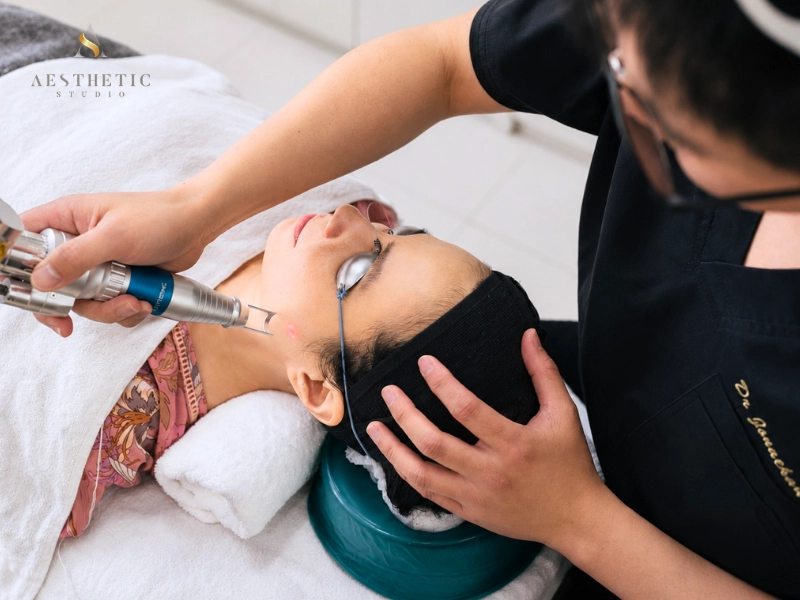
Pico laser, also known as picosecond laser, is an established laser technology for treating several types of pigmentation and improving skin texture.
Conventional pigment lasers, such as Q-switched lasers, deliver energy in nanoseconds (billionths of a second). Pico lasers work around a thousand times faster, with pulses of roughly 300 to 900 picoseconds¹. These ultra-short pulses create a strong photoacoustic effect that shatters pigment into very fine particles.
The same technology has a second use. When the beam is split into many tiny points (fractional pico laser), it creates microscopic treatment zones beneath an intact skin surface. These zones trigger collagen remodelling, which is why pico laser is also used for selected acne scars and textural concerns.
In short
Pico laser is a laser treatment that delivers energy in pulses lasting trillionths of a second. It is used to break up unwanted pigment, such as sun spots, freckles and Hori’s naevus, and to fade tattoos. In fractional mode it stimulates skin remodelling for selected acne scars, enlarged pores and uneven texture.
Benefits
What Are The Benefits & Uses of Pico Laser?
Pico laser is used for a wider range of concerns than most lasers. These include sun spots and freckles, deeper pigment such as Hori’s naevus, acne scars, enlarged pores and tattoos. What it can achieve depends on the concern, its depth and your skin type.
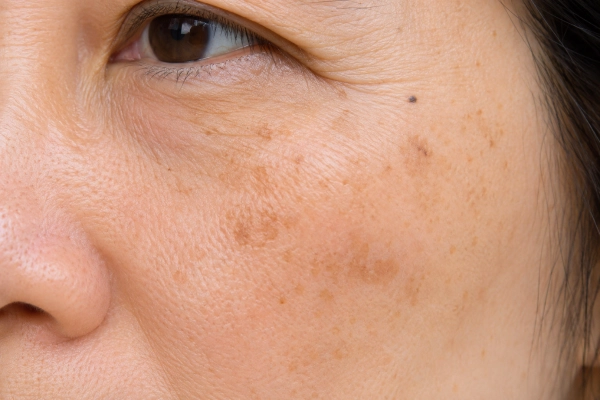
Pigmentation
Pico Laser helps reduce sun spots, freckles and other stubborn pigmentation for clearer skin. By breaking down unwanted pigment, superficial spots may improve within a few sessions.
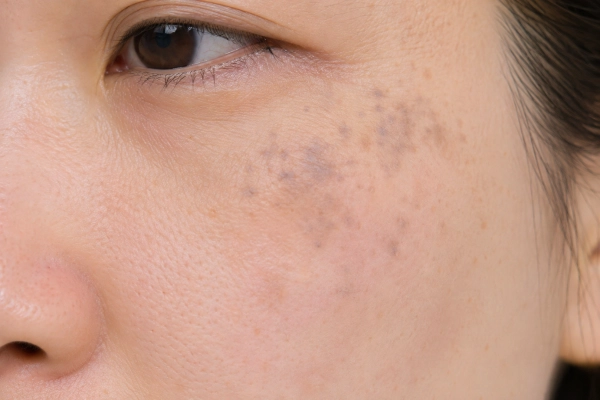
Deeper Pigment
Deeper dermal pigment such as Hori’s naevus and naevus of Ota sits too deep for creams to reach. This is one of the best-supported uses of pico laser¹, though a course of several sessions is usually needed.
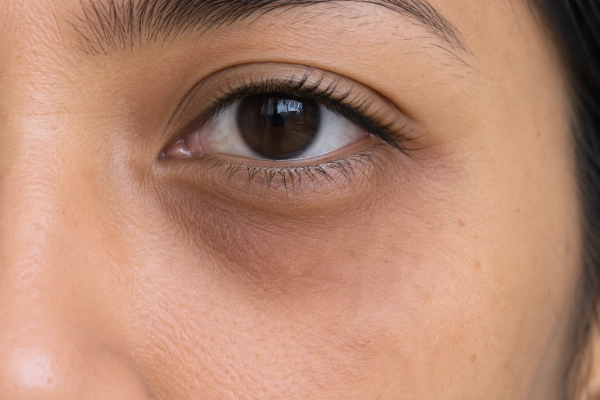
Dark Eye Circles
When dark eye circles are caused primarily by pigmentation rather than hollowing or visible blood vessels, Pico Laser may help lighten discolouration⁴ for a brighter, more even-looking under-eye area.
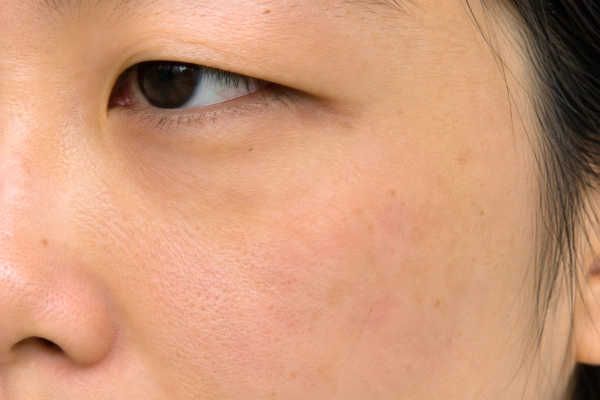
Uneven Skin Tone
Achieve a more even-looking complexion by addressing certain pigmentation-related discolouration. Suitable Pico Laser treatments may help improve skin clarity and reduce the appearance of patchy, uneven skin tone.
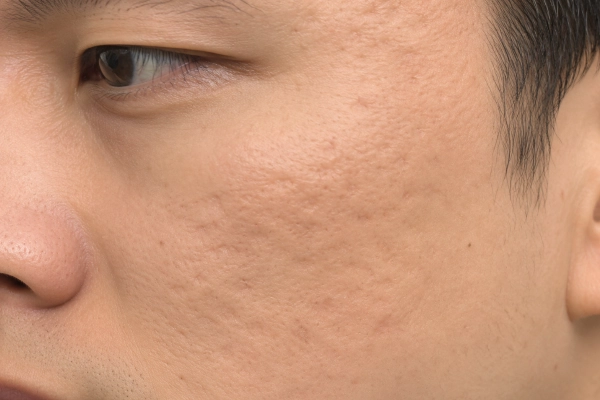
Acne Scars
Soften the appearance of selected depressed acne scars through fractional Pico Laser treatment. By stimulating skin remodelling, treatment can gradually improve scar visibility and surrounding skin texture.
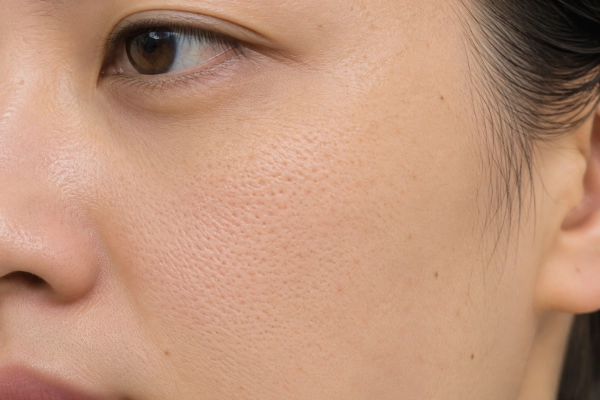
Enlarged Pores
Refine uneven skin texture and minimise the appearance of enlarged pores. Fractional Pico Laser may stimulate skin remodelling, helping create a smoother, more refined-looking skin surface over time.
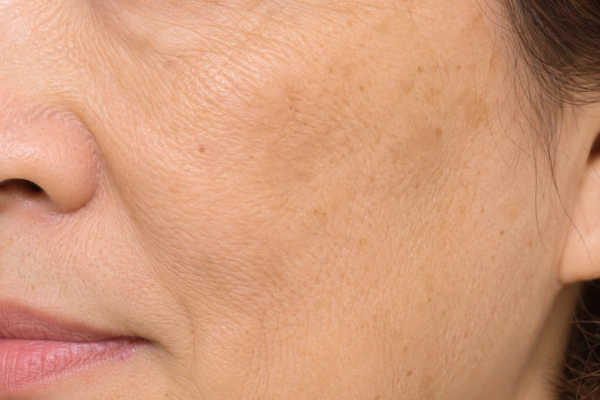
Fine Lines
Support collagen remodelling to improve selected fine lines, early signs of photoageing and textural irregularities. Fractional picosecond treatment may help skin appear smoother and more refreshed over time.
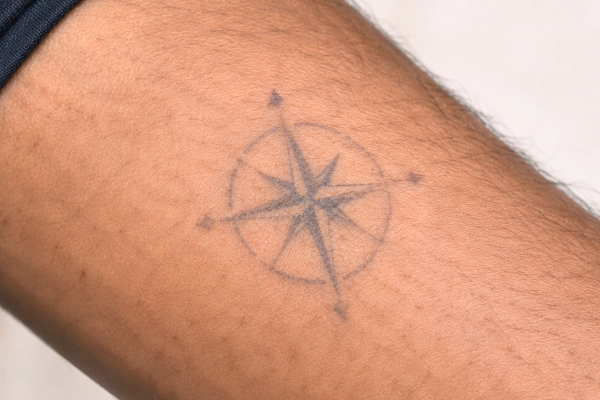
Tattoo Removal
Fade unwanted tattoos by breaking down ink particles into smaller fragments that the body gradually clears. Treatment effectiveness depends on ink colour, depth and density, with multiple sessions typically required.
Types
Types of Pico Laser Treatments
Not all pico laser treatments work in the same way. By choosing the wavelength, energy and delivery method, our doctor can target pigment at different depths, reduce certain types of redness or stimulate collagen remodelling.
| Treatment type | Best suited for | How it works |
|---|---|---|
|
Pico Toning Laser |
Uneven skin tone, dullness and scattered pigmentation |
Low-energy pulses are passed evenly across the face to gradually break down scattered pigment and improve skin clarity. |
|
Fractional Pico Laser |
Acne scars, enlarged pores, fine lines and uneven skin texture |
The beam is split into many microscopic points that create tiny treatment zones beneath the skin surface, stimulating collagen remodelling over time. |
|
Gold Toning (Yellow Laser) |
Post-acne redness, facial erythema and selected vascular concerns |
Uses a specialised 595nm yellow wavelength to target superficial blood vessels and reduce the appearance of facial redness. |
|
RuVY Touch (Red Laser) |
Freckles, sun spots and selected superficial pigmentation |
Uses a specialised 660 nm red wavelength to target superficial pigmentation, helping lighten selected freckles and sun spots. |
|
Pico Spot Treatment |
Individual dark spots, deeper pigmentation and tattoo ink |
Focused, higher-energy pulses fragment pigment or ink in a defined area, which the body then clears gradually. |
Procedure
What Happens During A Pico Laser Session?
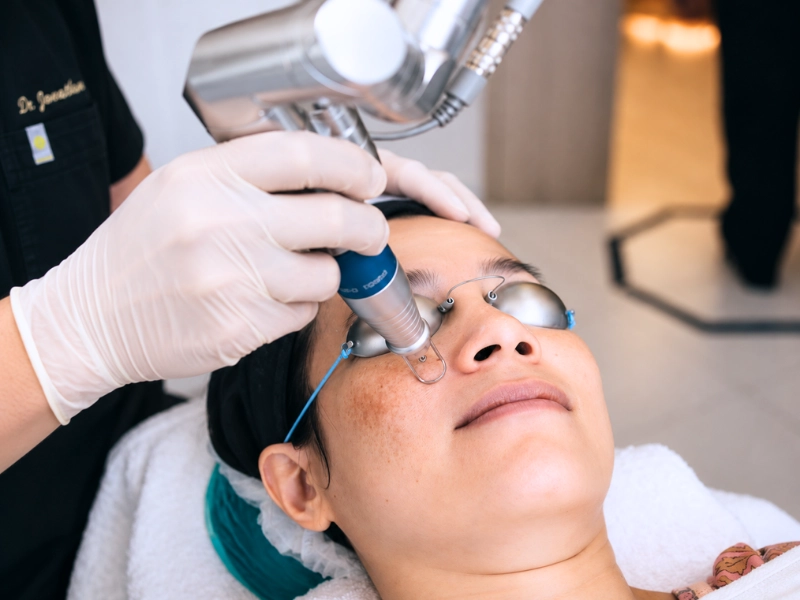
Personalised Skin Assessment. Our doctor assesses your skin concerns to determine whether Pico Laser is suitable and which treatment approach may best address your goals.
Preparing for Comfort. Your skin is gently cleansed, with numbing cream applied for approximately 30–45 minutes when needed.
Your Pico Laser Treatment. With protective eyewear in place, controlled laser pulses are delivered to the targeted areas. A full-face session typically takes just 15–20 minutes.
Recovery & Aftercare. Soothing skincare and sun protection are applied, and you can usually resume daily activities shortly afterwards, with personalised aftercare guidance provided.
Does Pico Laser Hurt?
Pico Laser is generally well tolerated, with most patients describing a mild snapping or warm prickling sensation. Pico Toning often requires no numbing, but numbing cream can be applied if you prefer additional comfort. For fractional or spot treatments, numbing is typically recommended to make the experience more comfortable.
FAQ
Frequently Asked Questions About Pico Laser
How many Pico Laser sessions will I need?
It depends on what is being treated. Superficial sun spots or freckles may respond after 1–2 sessions. Fractional pico laser for acne scars usually involves 3–4 sessions, spaced around 3–4 weeks apart². Pico toning is typically done as a course of several sessions.
Deeper pigmentation such as Hori’s naevus, melasma and tattoo removal usually need more sessions over a longer period. Your doctor will recommend an initial plan and review your progress before advising further treatment.
How long is the downtime after Pico Laser?
Downtime ranges from a few hours to about a week, depending on the treatment.
- Pico Toning: mild redness that usually settles within a few hours to 1–2 days.
- Fractional Pico Laser: redness, sensitivity or temporary roughness for about 1–3 days, sometimes longer.
- Pico Spot Treatment: treated spots darken and may form light crusts that flake off over about 5–10 days.
These are general estimates, not guaranteed timelines. If you have an important event coming up, let our doctors know so it can be factored into your plan.
How soon can I see results from Pico Laser?
For superficial pigmentation, changes often appear within 1–2 weeks as treated spots darken, flake and clear. Further lightening may continue over the following 4–6 weeks.
Fractional pico laser works more gradually. Changes in acne scars and texture are usually assessed over several weeks to 2–3 months as collagen remodels. Timelines vary with the treatment mode, your skin and how it responds.
Is Pico Laser effective for pigmentation and dark spots?
Yes, for many types, but not all dark spots behave the same way. Pico laser works well for sun spots and freckles, and is one of the best-supported options for deeper pigment such as Hori’s naevus and naevus of Ota¹.
Melasma and post-inflammatory hyperpigmentation need a more cautious approach. If you’re unsure what type of pigmentation you have, a skin assessment can confirm whether pico laser is appropriate.
Can Pico Laser help with acne scars and enlarged pores?
Fractional pico laser can improve selected depressed acne scars² ³, uneven texture and enlarged pores by stimulating skin remodelling.
Deeper or tethered scars may need other procedures, such as subcision or TCA Cross. Pore size is also influenced by oil production and skin elasticity. An assessment helps identify what pico laser can realistically improve and whether another approach would suit you better.
What should I expect after Pico Laser treatment, day by day?
After spot treatment for pigmentation, a typical recovery looks like this:
- Day 0–1: temporary redness, warmth or mild swelling. Treated spots may look darker.
- Days 2–3: redness begins to settle, and some spots develop light crusting.
- Days 4–7: crusts and darkened spots gradually flake away. Avoid picking or scrubbing.
- Days 7–14: most surface healing has settled, though some redness or pigment change can linger.
- Weeks 2–6: further lightening of pigmentation may become noticeable.
Pico toning involves much less visible recovery. Fractional treatment and tattoo removal follow different timelines.
Medical References
- Wu DC, Goldman MP, Wat H, Chan HHL. A systematic review of picosecond laser in dermatology: evidence and recommendations. Lasers in Surgery and Medicine. 2021;53(1):9–49. Read the published review
- Kwon HH, Yang SH, Cho YJ, Shin E, Choi M, Bae Y, Jung JY, Park GH. Comparison of a 1064-nm neodymium-doped yttrium aluminum garnet picosecond laser using a diffractive optical element vs. a nonablative 1550-nm erbium-glass laser for the treatment of facial acne scarring in Asian patients: a 17-week prospective, randomized, split-face, controlled trial. Journal of the European Academy of Dermatology and Venereology. 2020;34(12):2907–2913. View the original study
- Brauer JA, Kazlouskaya V, Alabdulrazzaq H, Bae YS, Bernstein LJ, Anolik R, Heller PA, Geronemus RG. Use of a picosecond pulse duration laser with specialized optic for treatment of facial acne scarring. JAMA Dermatology. 2015;151(3):278–284. View the original study
- Vanaman Wilson MJ, Jones IT, Bolton J, Larsen L, Wu DC, Goldman MP. Prospective studies of the efficacy and safety of the picosecond 755, 1,064, and 532 nm lasers for the treatment of infraorbital dark circles. Lasers in Surgery and Medicine. 2018;50(1):45–50. View study in the journal
About This Page
Medically reviewed by Dr. Jonathan Lee, Aesthetic Physician & Consultant Surgeon · Last reviewed November 2026
This page provides evidence-informed information about Pico Laser treatment for general educational purposes and does not replace personalised medical advice. Treatment suitability, potential benefits, risks, and expected results depend on your skin condition and individual response, and should be discussed with our doctors during consultation.