

If you are researching a nose thread lift in Singapore, you have likely come across these three materials repeatedly: PDO nose thread, PCL nose thread, and PLLA nose thread.
Many clinics present this as a simple comparison — which lasts longer, which is stronger, which is “better.” But in structural areas like the nose, the material is not just about longevity. It directly affects projection strength, bridge stability, collagen behaviour, and how well the lift holds against gravity over time.
Unlike facial thread lifts where subtle repositioning may be sufficient, nose thread lifts require vertical structural support. The nasal bridge must withstand tissue pressure and daily movement. This is where material science becomes clinically relevant.
Understanding the difference between PDO, PCL and PLLA nose threads is important, especially if your goal is noticeable bridge height, stronger projection, and longer-lasting structural definition. Let’s explore how each material behaves, and which is most suitable for non-surgical nose augmentation in Singapore.
What Are Nose Threads Made Of?
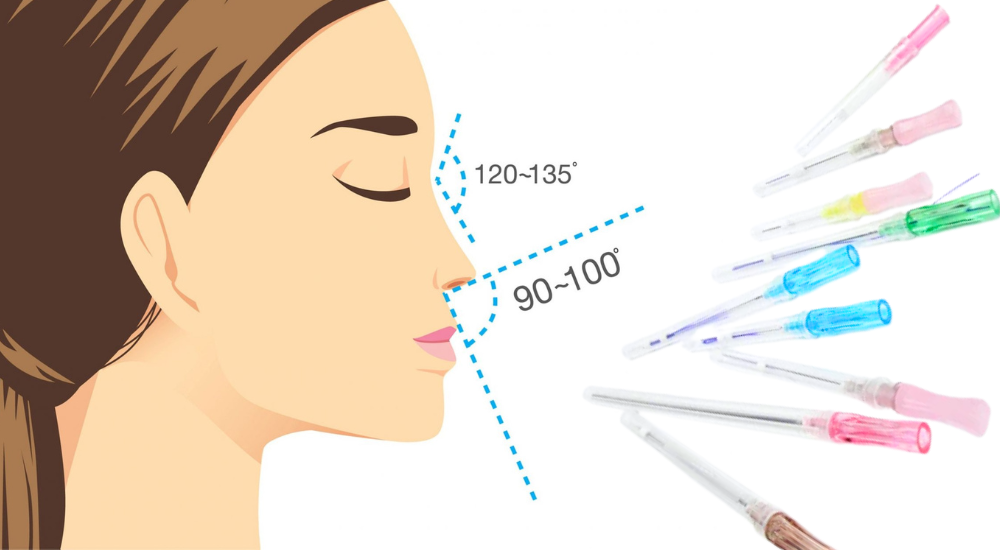
Modern nose threads used in a nose thread lift are made from biodegradable medical polymers that provide immediate mechanical lift while stimulating collagen production as they gradually dissolve over time. The three main materials used in nose thread lifts are:
- PDO (Polydioxanone) nose thread
- PCL (Polycaprolactone) nose thread
- PLLA (Poly-L-Lactic Acid) nose thread
While all three polymers are medically established in Singapore and considered safe when properly performed, they differ significantly in how long they maintain structural support, how strong their mechanical hold is, how quickly they degrade, and how long collagen stimulation continues.
In a weight-bearing area like the nose, where vertical bridge projection and stability are critical, these differences directly influence lift longevity and projection quality.
Comparison: PDO vs PCL vs PLLA Nose Thread
PDO Nose Thread
-
Last 6–12 months
-
Degrades fast
-
Moderate mechanical lift
-
Shorter projection retention
-
Moderate collagen stimulation
-
Best for subtle/short-term nose thread lifts
PCL Nose Thread
-
Last 12–24 months
-
Degrades slowly
-
Stronger mechanical lift
-
Longer nose projection retention
-
Prolonged collagen stimulation
-
Best for long-lasting lifts
PLLA Nose Thread
-
Last 18–24 months
-
Degrades slowly
-
Moderate mechanical lift
-
Projection appears gradually over time
-
Strong collagen stimulation
-
Best for gradual collagen support
Which Nose Thread Material Provides the Best Lift?
When it comes to structural nose enhancement, each thread material offers different benefits:
- PDO Nose Threads: Provide a subtle or short-term lift, ideal for mild enhancement.
- PCL Nose Threads: Deliver stronger, longer-lasting lift, making them well-suited for patients seeking durable bridge projection.
- PLLA Nose Threads: Focus on gradual collagen reinforcement, rather than immediate structural change.
Because vertical bridge support is essential for maintaining shape and projection, slower-degrading materials like PCL generally offer more reliable, long-term results. Ultimately, the best choice depends on nasal anatomy, desired height, and overall longevity goals.
Conclusion
Choosing the right nose thread material is crucial for achieving a lasting, natural-looking lift. While PDO and PLLA threads have their benefits, PCL nose threads offer stronger, longer-lasting structural support, making them ideal for patients seeking noticeable bridge projection and durable results.
At our clinic in Singapore, we specialise in PCL nose thread lifts using an advanced HIKO Korean technique to ensure safe, precise, and natural outcomes tailored to your nasal anatomy. Our doctors can assess your nasal structure, discuss your goals, and recommend a personalised plan to achieve optimal lift with minimal downtime.
If you’re considering a non-surgical nose thread lift, book a consultation with us today.
Frequently Asked Questions
WHAT IS A PCL NOSE THREAD?
A PCL nose thread is a newer-generation biodegradable material designed to retain structural integrity longer. Because it degrades more slowly, PCL maintains lift for extended periods while continuing to stimulate collagen.
PCL nose threads generally last 12 to 24 months, depending on individual metabolism and treatment technique. This makes them particularly suitable for patients seeking stronger, longer-lasting structural projection.
Benefits of PCL Nose Thread
-
Longer-lasting results (12–24 months)
-
Stronger structural support for bridge projection
-
More sustained collagen stimulation
-
Better projection retention over time
-
Reduced frequency of repeat procedures
PCL is often the preferred choice for patients with flatter nasal bridges or those seeking a more durable, noticeable lift.
WHAT IS A PDO NOSE THREAD?
A PDO nose thread is a biodegradable material commonly used in aesthetic medicine to create mild to moderate bridge projection. It provides immediate mechanical lift and stimulates collagen formation as it dissolves.
PDO nose threads typically last 6 to 12 months, as they degrade faster than PCL or PLLA. While collagen forms around the thread during this time, structural projection diminishes sooner, which may require follow-up treatments to maintain lift.
Benefits of PDO Nose Thread
-
Lower initial cost
-
Suitable for subtle bridge enhancement
-
Appropriate for patients seeking shorter-term/temporary results
WHAT IS A PLLA NOSE THREAD?
PLLA nose threads focus primarily on collagen stimulation rather than immediate mechanical lift. They gradually encourage tissue reinforcement over time.
PLLA threads can last 18 to 24 months, depending on the individual’s metabolism rate, but they are generally ideal for patients looking for gradual, long-term tissue support rather than immediate bridge projection.
Benefits of PLLA Nose Thread
-
Prolonged collagen stimulation
-
Gradual tissue strengthening
-
Longer potential duration compared to PDO
-
Suitable for patients prioritising biostimulation
While PLLA can improve structural support over time, it is less commonly chosen for vertical projection compared to PCL.