

PLLA-SCA Body Treatments
Regenerative collagen biostimulator for skin laxity, cellulite, body contouring & volume loss
Introduction
What Are Sculptra Body Treatments Used For?
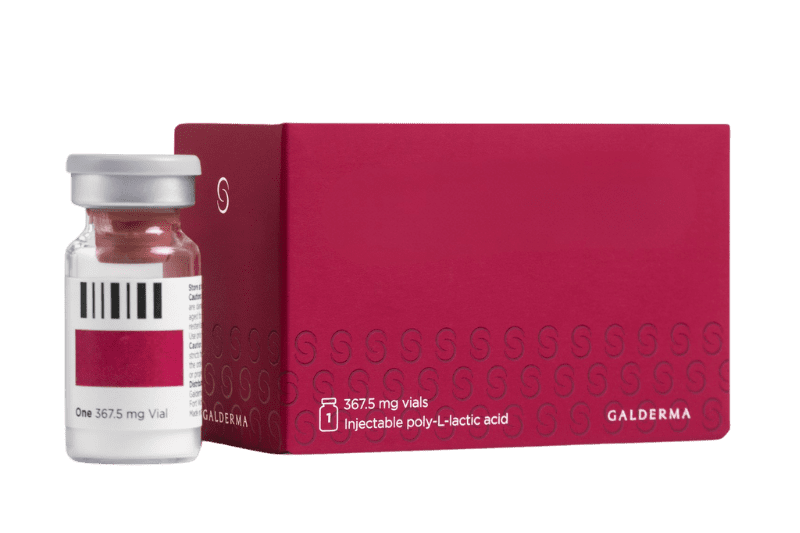
Sculptra (PLLA-SCA) body treatments are commonly used to address concerns such as skin laxity, cellulite visibility, contour irregularities, and age-related volume loss in selected areas of the body. While PLLA-SCA is widely recognised for its role in facial collagen stimulation, collagen decline can also affect skin firmness, elasticity, texture, and tissue quality elsewhere in the body over time.
As a poly-L-lactic acid (PLLA-SCA) collagen biostimulator, Sculptra Body is designed to stimulate collagen production gradually within the treated area. By supporting the body’s natural collagen-building processes, it is often considered for areas where skin quality, tissue support, and contour definition are important concerns.
Common treatment areas may include the buttocks, hips, abdomen, arms, thighs, and knees, as well as other areas affected by collagen loss and tissue laxity.
How It Works
How Do PLLA-SCA Body Treatments Work?
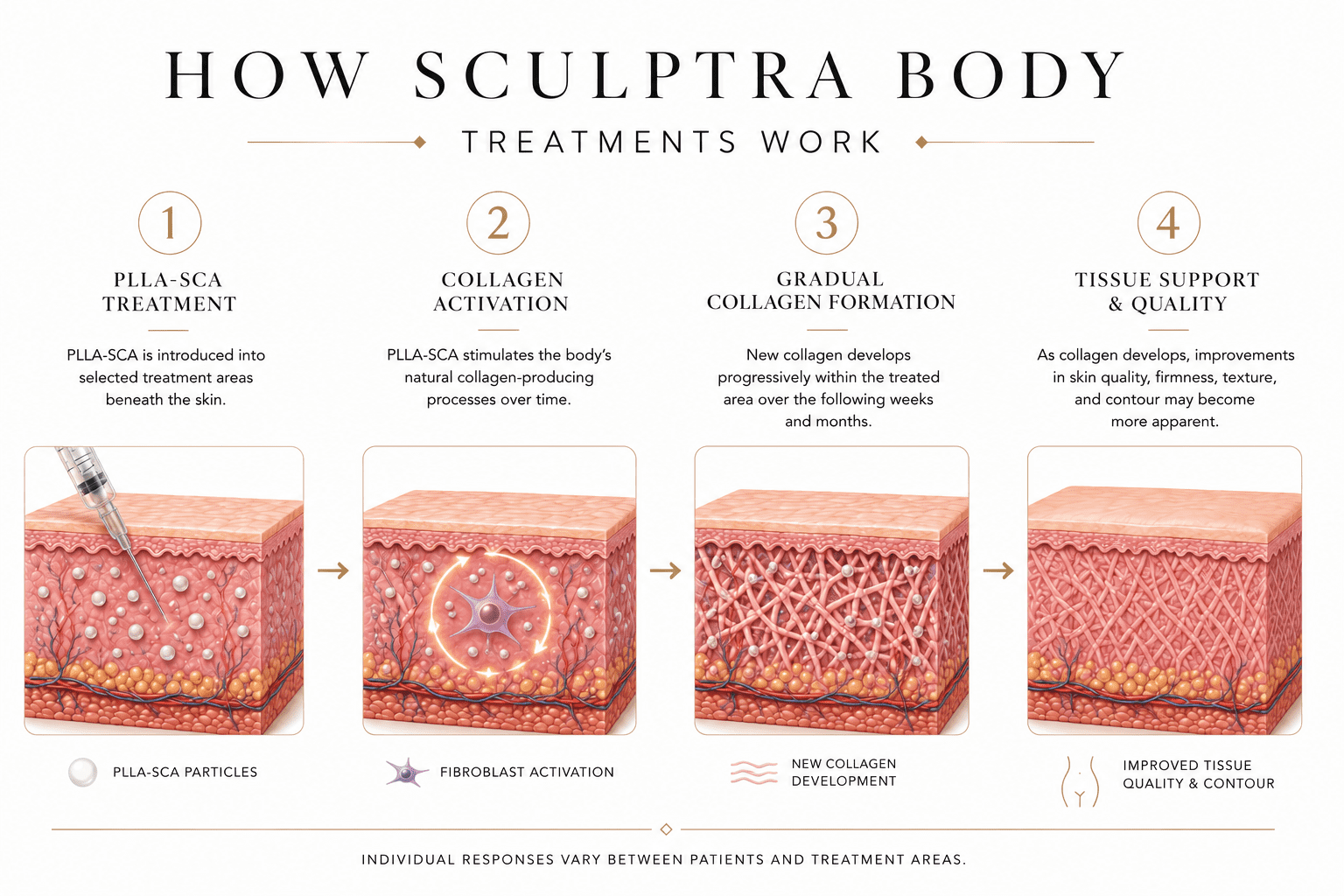
PLLA-SCA is a collagen biostimulator designed to stimulate collagen production gradually over time. Unlike treatments that primarily provide immediate volume or structural support, PLLA-SCA works by encouraging the body’s natural collagen-building processes within the treated area.
Collagen is an important structural protein that contributes to skin firmness, elasticity, tissue quality, and overall support. As collagen production naturally declines with age, changes in skin quality, tissue support, and body contours may become more noticeable over time.
Following treatment, the PLLA-SCA particles stimulate a gradual collagen response within the surrounding tissues. As new collagen develops over the following weeks and months, collagen density and tissue quality progressively improve, contributing to gradual changes within the treated area.
Treatment Areas
Explore Common PLLA-SCA Body Treatment Areas
Explore the treatment areas below to learn more about how PLLA-SCA collagen stimulation is commonly incorporated into body treatment plans involving skin quality, tissue support, and contour-related concerns.
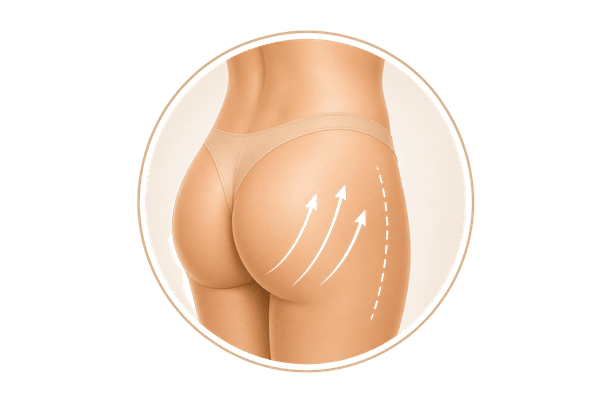
Non-Surgical Butt Lift
Learn how collagen stimulation may support buttock volume, contour, shape, and projection without surgery.

Cellulite Reduction
Discover treatment approaches commonly used to improve skin texture and reduce visible cellulite concerns.
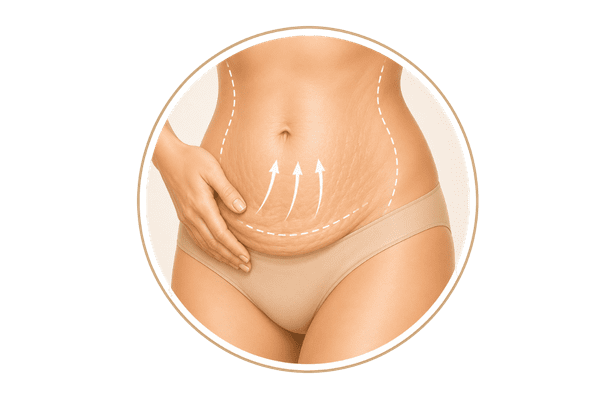
Post-Pregnancy Body
Explore treatment considerations for skin laxity, tissue quality, and body contour changes after pregnancy.
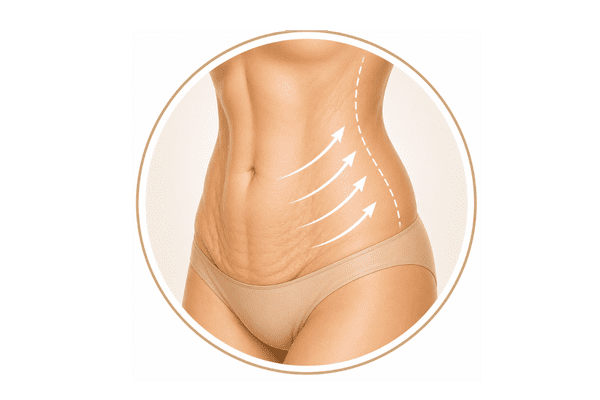
Post-Weight Loss Changes
Learn about treatment approaches for skin laxity, volume loss, and contour changes after weight loss.
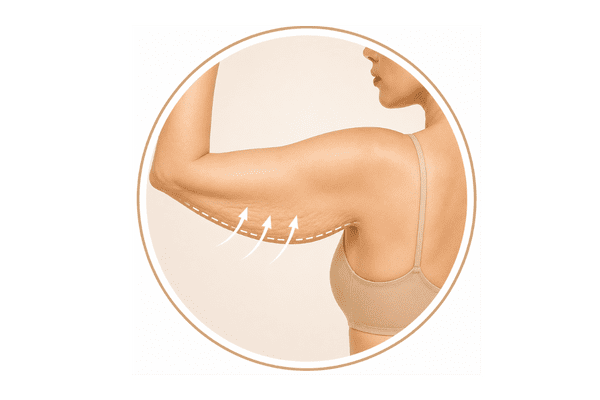
Arm Rejuvenation
Discover collagen-focused treatments commonly used for skin laxity and age-related changes affecting the arms.
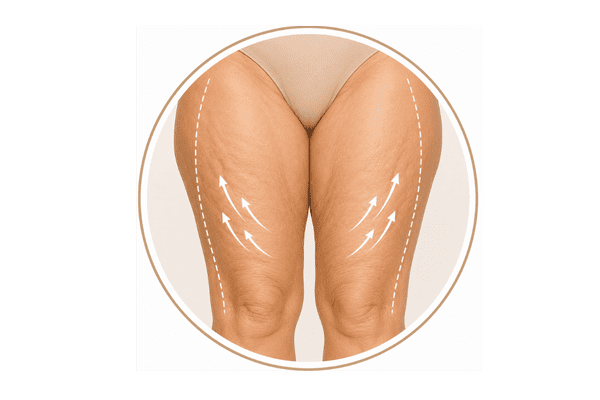
Thigh Rejuvenation
Explore treatment approaches for thigh skin laxity, cellulite concerns, and age-related tissue changes.
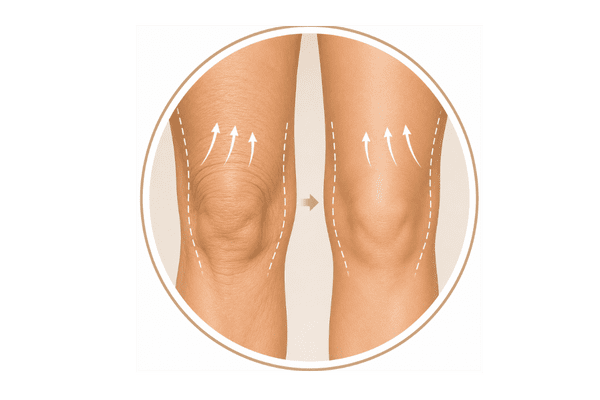
Knee Rejuvenation
Learn more about treatment options for skin laxity and age-related changes around the knees.
Benefits
The Role of Collagen in Body Rejuvenation

Collagen helps support the firmness, structure, and quality of our skin.
As collagen production naturally declines over time, changes associated with aging, pregnancy, significant weight loss, and lifestyle factors may become more noticeable.
For some individuals, this can mean that certain areas of the body appear less firm, less supported, or no longer reflect how they feel about themselves. Even after achieving goals such as weight loss or improved fitness, changes in tissue quality and body contours may still remain.
PLLA-SCA body treatments are commonly incorporated into treatment plans focused on collagen stimulation and tissue quality. Depending on individual concerns, treatment goals may include:
- Supporting skin firmness and elasticity
- Enhancing tissue quality and tissue support
- Improving body contours and contour definition
- Addressing changes associated with collagen decline
FAQ
Frequently Asked Questions About PLLA-SCA Body Treatments
Is PLLA-SCA Safe for Body Treatments?
Sculptra (PLLA-SCA) has been used in aesthetic medicine for many years and is widely recognised for its role as a collagen biostimulator. Like any medical treatment, suitability should be assessed on an individual basis, taking into account factors such as medical history, treatment goals, anatomy, and the area being treated.
A thorough consultation is important to determine whether treatment is appropriate and to discuss potential risks, benefits, and expected outcomes.
What areas of the body can it be used for?
Sculptra may be incorporated into treatment plans involving multiple areas affected by collagen decline and tissue laxity. Common treatment areas include the buttocks, hips, abdomen, arms, thighs, knees, and selected areas where skin quality, contour definition, or tissue support are concerns. Suitability depends on individual anatomy, treatment goals, and clinical assessment.
Can Sculptra Help With Skin Laxity on the Body?
Sculptra (PLLA-SCA) is commonly considered for concerns relating to skin laxity because it focuses on collagen stimulation rather than simply replacing volume. Collagen is an important structural protein that contributes to skin firmness, elasticity, and tissue support throughout the body. As collagen production naturally declines over time, areas such as the abdomen, thighs, arms, buttocks, and knees may appear less firm or less supported.
By stimulating collagen production gradually within the treated area, PLLA-SCA may be incorporated into treatment plans focused on improving tissue quality, supporting skin firmness, and enhancing contour definition. Suitability depends on the severity of skin laxity, the treatment area, and individual treatment goals.
Can Sculptra be used after significant weight loss?
Following significant weight loss, some individuals may notice changes in skin quality, tissue support, and body contours. While achieving a healthier weight can be an important milestone, collagen decline and reductions in tissue support may leave certain areas appearing less firm than expected. This is particularly common following rapid weight loss or weight loss associated with GLP-1 medications.
Sculptra (PLLA-SCA) may be incorporated into selected treatment plans focused on collagen stimulation and tissue quality in areas affected by volume changes or skin laxity. A consultation is necessary to determine whether PLLA-SCA is appropriate based on individual anatomy, concerns, and treatment objectives.
Does Sculptra Body Replace the Need for Surgery?
Sculptra (PLLA-SCA) and surgical procedures address different concerns and should not be viewed as direct alternatives in every situation.
While PLLA-SCA is designed to stimulate collagen production gradually over time, surgery may be more appropriate for individuals with significant tissue excess or advanced skin laxity.
For suitable candidates, PLLA-SCA may be incorporated into treatment plans focused on skin quality, tissue support, contour definition, and age-related changes associated with collagen decline. The most appropriate approach depends on the treatment area, the degree of tissue change, and the individual’s goals. A personalised assessment is essential to determine suitability.
What Is the Difference Between Sculptra for the Face and Sculptra for the Body?
Sculptra used for the face and Sculptra used for the body share the same underlying principle of collagen stimulation. In both cases, poly-L-lactic acid (PLLA-SCA) is designed to stimulate collagen production gradually within the treated area, supporting tissue quality and structural support over time.
The main difference lies in the treatment goals and areas being addressed.
Facial treatments are often focused on age-related volume loss, facial support, and overall facial rejuvenation. Body treatments, on the other hand, are more commonly incorporated into treatment plans focused on concerns such as skin laxity, cellulite visibility, contour irregularities, age-related volume changes, and changes associated with pregnancy or significant weight loss.
While the collagen-stimulating mechanism is similar, treatment plans are tailored according to the unique characteristics and goals of each treatment area.