

Cellulite
Learn what causes cellulite and explore personalised cellulite treatment options for smoother-looking skin
Introduction
Understanding Cellulite
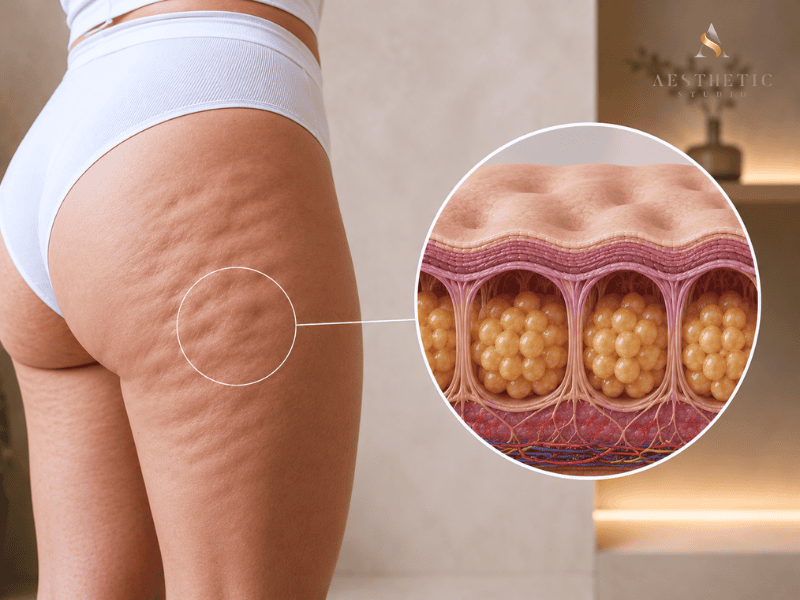
Cellulite is a common skin condition characterised by a dimpled or “orange peel” appearance of the skin. It most commonly affects the thighs, buttocks, hips, and abdomen, and can occur in people of all body types, although it is considerably more common in women.
Rather than being caused by excess body fat alone, cellulite develops through structural changes beneath the skin involving connective tissue, fat, and skin support. Understanding how cellulite develops is the first step towards choosing the most appropriate cellulite treatment.
While cellulite is a normal and extremely common skin concern, its appearance varies from person to person. Factors such as genetics, ageing, hormones, skin quality, and collagen decline can all influence how noticeable cellulite becomes, which is why treatment often requires a personalised approach rather than a one-size-fits-all solution.
Causes
How Does Cellulite Develop?
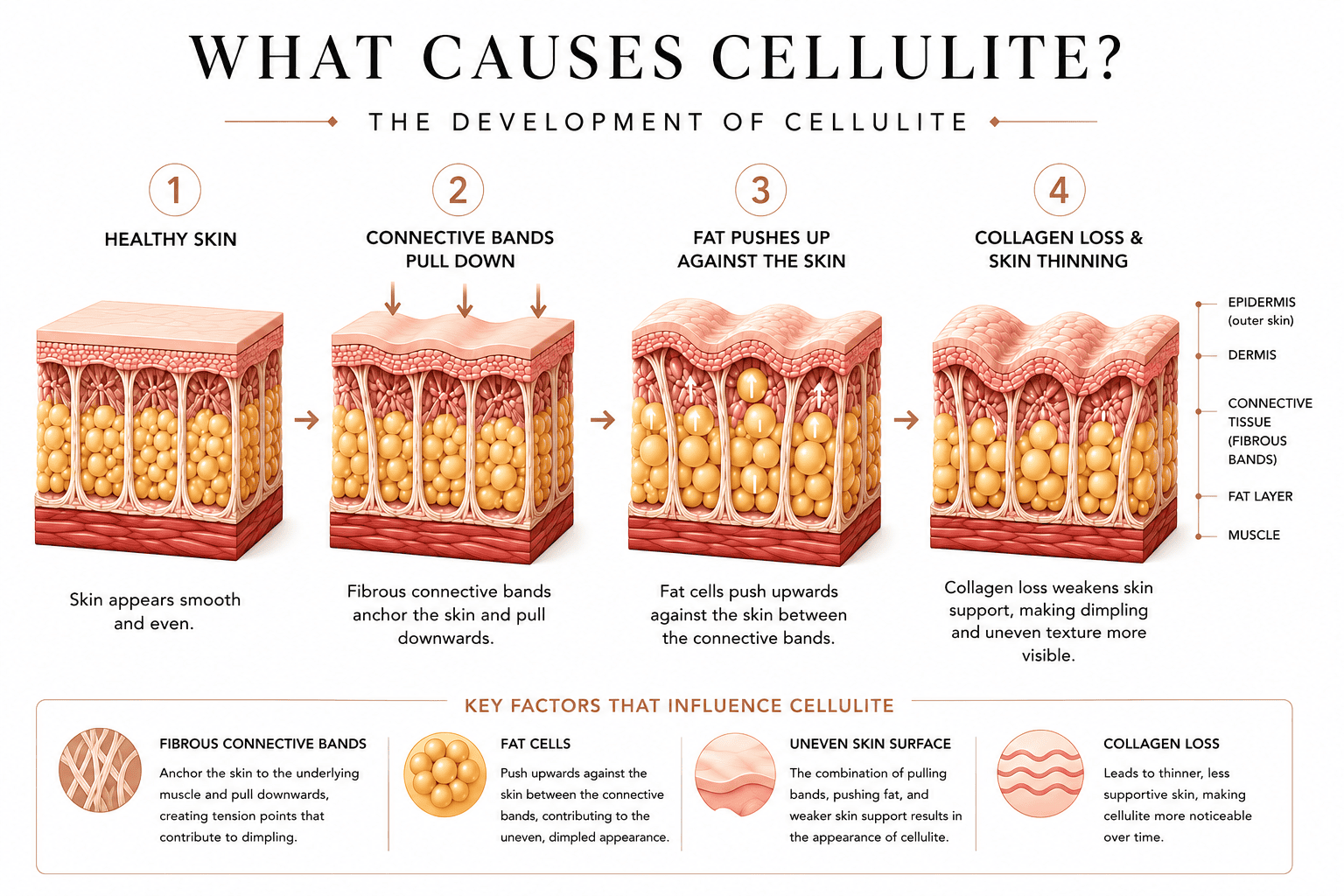
The characteristic dimples of cellulite develop because different structures beneath the skin exert opposing forces on the skin surface. While some areas of the skin are firmly anchored by connective tissue, neighbouring areas are pushed upwards by underlying fat, creating the uneven or “orange peel” appearance associated with cellulite.
Connective Tissue Anchors The Skin
Beneath the skin are strong fibrous connective tissue bands that anchor the skin to the deeper tissues below. These bands help support the skin while creating small compartments where fat naturally sits.
Fat Pushes Against The Skin
As fat cells expand, they begin pushing upwards against the skin. However, the connective tissue bands remain firmly attached, continuing to pull the skin downwards at fixed attachment points.
Uneven Tension Creates Cellulite
Because some areas of the skin are pulled down while neighbouring areas are pushed upwards, the skin surface no longer appears completely smooth. This difference in tension creates the dimples and uneven texture that characterise cellulite.
Aging Makes Cellulite More Noticeable
Although aging does not directly cause cellulite, collagen naturally declines over time, causing the skin to become thinner and provide less structural support. As a result, the underlying dimpling often becomes more visible with age.
Cellulite Grades
How Cellulite Is Assessed
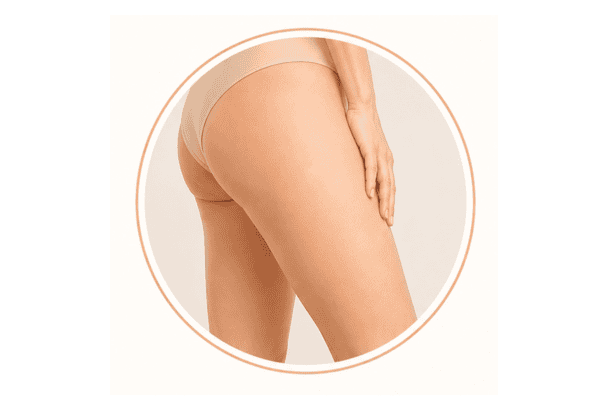
Grade 0 – No Visible Cellulite
The skin appears smooth and even when standing, lying down, or during gentle skin compression. There are no visible dimples or skin depressions.
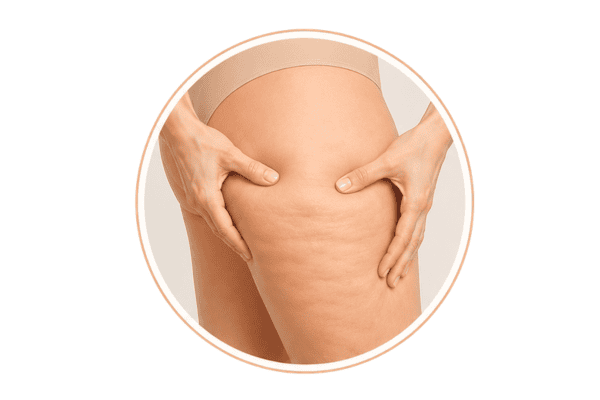
Grade 1 – Mild Cellulite
The skin appears smooth at rest, but fine dimples become visible when the skin is pinched or gently compressed. This is the earliest visible stage of cellulite.
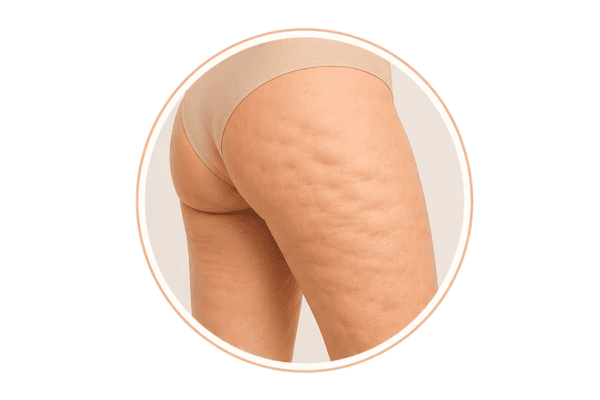
Grade 2 – Moderate Cellulite
Dimpling becomes visible while standing without the need to pinch the skin. The uneven skin texture may become less noticeable when lying down.
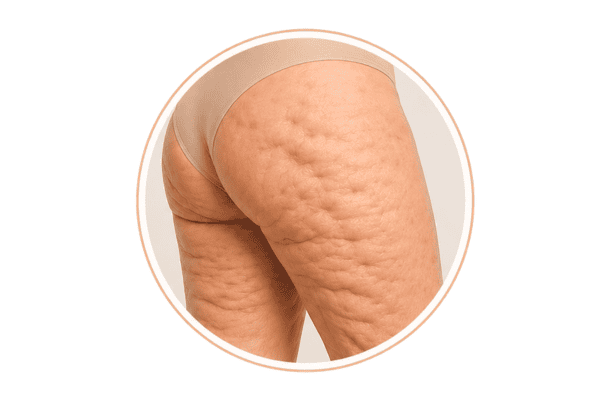
Grade 3 – Severe Cellulite
Deep skin depressions and pronounced dimpling remain visible when standing and lying down. The uneven skin texture is more extensive and easily noticeable.
Treatments
Choosing The Right Cellulite Treatment
No two cases of cellulite are exactly alike. While one person may be concerned about skin laxity, another may have deeper skin depressions caused by fibrous connective tissue bands. Understanding these differences allows treatments to be tailored to your individual concerns.
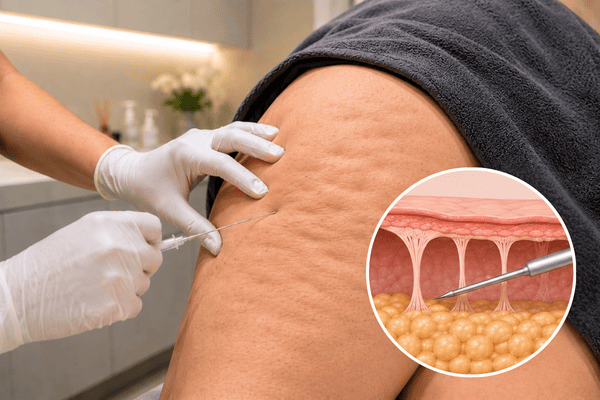
Cellulite Subcision
Cellulite subcision is designed to release the fibrous connective tissue bands that pull the skin downwards and create visible dimpling. It is often recommended for patients with deeper skin depressions and may be combined with collagen-stimulating treatments such as Sculptra® to support skin quality and enhance overall treatment outcomes.
Best suited for:
- Moderate to severe cellulite
- Deep skin depressions
- Fibrous connective tissue bands
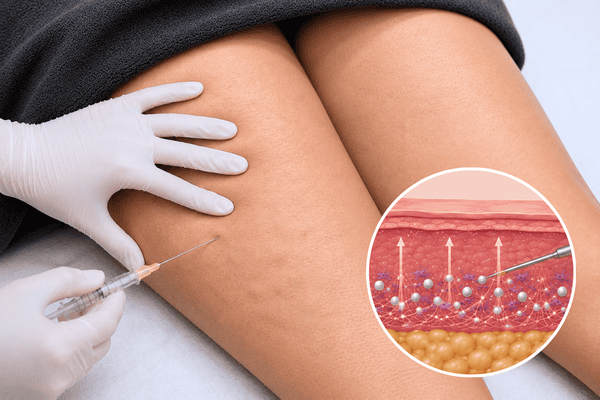
Collagen Biostimulators
Injectable collagen biostimulators such as Sculptra® gradually stimulate your body’s natural collagen production, helping improve skin quality and structural support over time. They may be suitable for cellulite associated with collagen decline and skin thinning, and are often combined with cellulite subcision to address multiple contributing factors.
Best suited for:
- Mild to moderate cellulite
- Skin thinning
- Age-related collagen decline
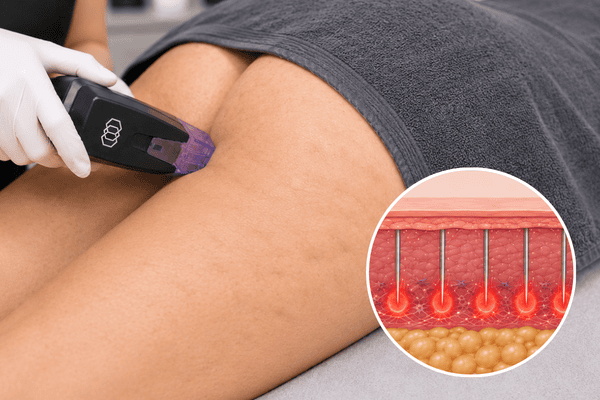
Morpheus8
Morpheus8 combines microneedling with radiofrequency energy to stimulate collagen remodelling beneath the skin. It improves skin texture, firmness, and overall skin quality, making it suitable for selected patients with mild cellulite or skin laxity. It may also complement collagen-stimulating treatments as part of a personalised treatment plan.
Best suited for:
- Mild to moderate cellulite
- Uneven skin texture
- Skin laxity
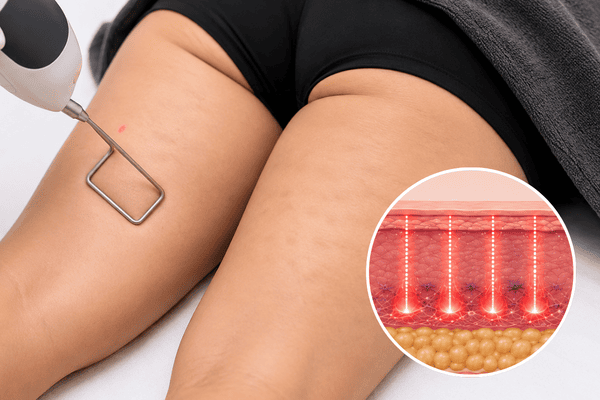
Fotona TightSculpting
Fotona TightSculpting uses laser technology to support skin tightening while improving overall skin quality and body contour. It may be recommended for patients with mild to moderate cellulite where skin laxity contributes to its appearance, either as a standalone treatment or alongside other treatment modalities.
Best suited for:
- Mild to moderate cellulite
- Skin laxity
- Body contouring
FAQ
Frequently Asked Questions About Cellulite
What is the best cellulite treatment?
There is no single “best” cellulite treatment because cellulite varies between individuals. The most appropriate treatment depends on the underlying causes of the cellulite, including the severity of dimpling, skin laxity, collagen loss and the presence of localised fat.
For example, cellulite subcision may be recommended for deeper dimples caused by tight fibrous bands, while collagen biostimulators such as Sculptra® may help improve skin quality and structural support. Morpheus8 and Fotona TightSculpting may be suitable for patients with mild cellulite where skin laxity contributes to the appearance.
A personalised assessment is important because many patients benefit from combining different treatment approaches rather than relying on a single procedure.
Why do I have cellulite if I’m skinny?
Slim people can still have cellulite because cellulite is not only related to body fat. It is mainly influenced by the structure of the skin and connective tissue beneath the skin.
Cellulite occurs when fibrous bands pull the skin downward while fat compartments push upward, creating a dimpled or uneven appearance. Genetics, hormones, collagen quality, skin thickness, and connective tissue structure all play a role in how visible cellulite becomes.
This is why two people with similar body weight or fitness levels can have very different skin texture. Someone may be slim, active, and healthy but still have visible cellulite on the thighs, buttocks, hips, or abdomen.
Being skinny does not prevent cellulite, and having cellulite does not mean someone is unhealthy. It is a very common skin texture concern, especially in women, and is influenced by anatomy as much as lifestyle.
Can cellulite be permanently removed?
Cellulite is a structural condition involving the skin, underlying fat and fibrous connective tissue, rather than something that can simply be “removed”. The goal of treatment is therefore to improve the appearance of cellulite by addressing the factors contributing to it, such as tethering fibrous bands, collagen decline, skin laxity or overall skin quality.
When the underlying causes are accurately identified and the most appropriate treatment (or combination of treatments) is selected, many patients experience long-lasting improvements. However, because the skin continues to age and collagen naturally declines over time, cellulite may gradually become more noticeable again in the future. This is why personalised treatment planning and, where appropriate, maintenance treatments may be recommended to help preserve skin quality and prolong results.
Does losing weight get rid of cellulite?
Losing weight may improve the appearance of cellulite for some individuals, but it does not always get rid of cellulite completely. This is because cellulite is not simply caused by excess body fat.
Cellulite forms when the skin, connective tissue, fat compartments, and collagen support interact in a way that creates dimpling or uneven texture. If someone has excess body fat, weight loss may reduce the pressure beneath the skin and make cellulite appear less noticeable. However, the fibrous connective bands and skin structure that contribute to cellulite may remain unchanged.
This explains why many slim or fit individuals still have cellulite. In some cases, rapid or significant weight loss may even make cellulite appear more visible if the skin becomes looser or less supported.
Weight management can support overall body contour and skin health, but cellulite is usually better understood as a structural skin concern rather than just a weight-related issue.
Can cellulite be treated without surgery?
Yes. Many modern cellulite treatments are minimally invasive or non-surgical. Depending on the underlying cause of the cellulite, treatment options may include cellulite subcision, collagen biostimulators, radiofrequency microneedling or laser-based skin tightening procedures.
Non-surgical cellulite treatments aim to address different aspects of cellulite, such as releasing fibrous connective tissue bands, stimulating collagen production, improving skin firmness or enhancing overall skin quality. The most suitable option depends on the individual’s skin characteristics and treatment goals.
Which cellulite treatment is right for me?
The most appropriate cellulite treatment depends on the severity of the cellulite, the degree of skin laxity, collagen quality, body composition and your treatment goals.
A clinical consultation allows our doctors to determine which structural changes are contributing most to your cellulite and recommend a treatment plan accordingly.
Treatment recommendations may include:
- Cellulite Subcision – Often recommended for deeper cellulite dimples caused by tight fibrous connective tissue bands tethering the skin. The procedure works by releasing these bands to reduce visible skin depressions.
- Sculptra® Collagen Biostimulator – May be suitable when collagen decline, skin thinning or reduced structural support contributes to the appearance of cellulite. By stimulating your body’s natural collagen production, Sculptra® helps improve skin quality and firmness gradually over time.
- Morpheus8 RF Microneedling – May be recommended for patients with mild cellulite where reduced skin firmness or skin texture plays a larger role. It combines microneedling with radiofrequency energy to stimulate collagen remodelling and improve overall skin quality.
- Fotona TightSculpting® – May be appropriate for selected patients with mild to moderate cellulite associated with skin laxity. The laser technology supports collagen remodelling and skin tightening while improving overall body contour.
What’s the difference between cellulite and loose skin?
Cellulite and loose skin can look similar in some areas, but they are different concerns.
- Cellulite appears as dimpling, uneven texture, or an “orange peel” appearance. It is caused by the interaction between fibrous connective bands, fat compartments, skin thickness, and collagen support beneath the skin.
- Loose skin, on the other hand, refers to skin laxity. It happens when the skin loses firmness and elasticity, often due to ageing, pregnancy, significant weight loss, or collagen decline. Loose skin may appear crepey, saggy, or less able to “snap back”.
The two concerns can occur together. For example, someone may have cellulite on the thighs together with skin laxity after weight loss or ageing.
Understanding the difference matters because cellulite and loose skin may require different approaches. Cellulite is more about dimpling and connective tissue structure, while loose skin is more about skin firmness and elasticity.
When will I start seeing results from my cellulite treatment?
The timing of results depends on the treatment performed. Some procedures may produce gradual improvements over several weeks or months as collagen remodelling occurs, while others may show earlier changes depending on their mechanism of action.
Because collagen production is a biological process, improvements in skin quality and cellulite often develop progressively rather than immediately. Our doctors will explain the expected treatment timeline during your consultation.