
Botulinum Toxin Treatment in Singapore
Relax targeted muscles to reduce wrinkles, slim the jawline, and manage excessive sweating
introduction
What is Botulinum Toxin?
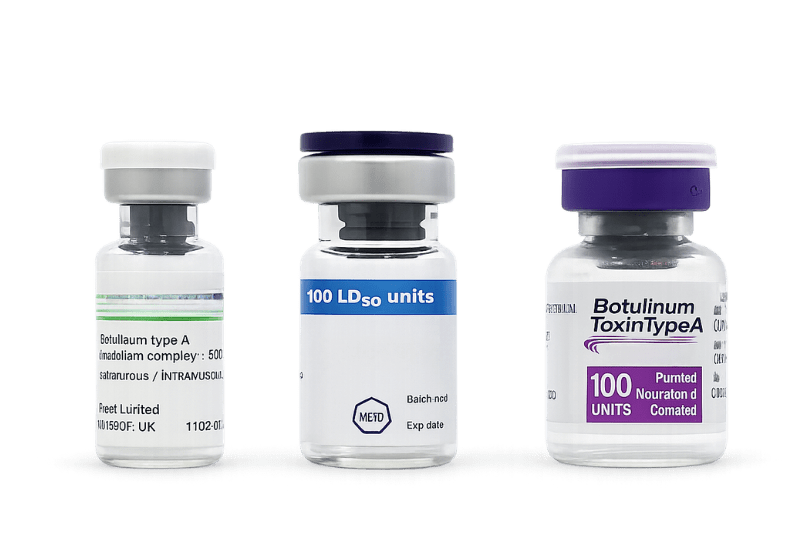
Botulinum toxin is a purified protein used in aesthetic medicine to temporarily relax targeted muscles. By reducing muscle activity, it softens dynamic wrinkles and helps refine areas of the face affected by repeated movement.
It is widely used in Singapore not only for wrinkle reduction, but also for jaw slimming, muscle tension, and excessive sweating.
When administered with precision, botulinum toxin works by interrupting the signals between nerves and muscles. This allows overactive muscles to relax, leading to smoother skin, improved facial balance, and reduced tension in targeted areas.
What it treats
What Does Botulinum Toxin Treat?
Botulinum toxin is used to address a range of aesthetic and functional concerns, depending on the muscles targeted and the treatment approach:

Fine Lines & Wrinkles
Dynamic wrinkles develop over time from repeated facial expressions, leading to lines across the upper face.
Botulinum toxin works by temporarily blocking nerve signals to targeted muscles, reducing their movement while softening fine lines and wrinkles.
Treatment areas include:
- Forehead lines
- Frown lines (between the brows)
- Crow’s feet (around the eyes)
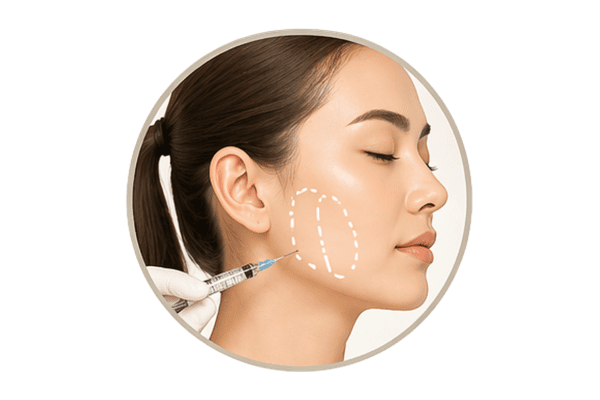
A prominent or overactive masseter muscle can create a wider, more square-shaped lower face.
By reducing nerve stimulation to the masseter, botulinum toxin gradually decreases muscle activity and bulk, resulting in a slimmer facial contour over time.
Typical concerns include:
- Square or wide jawline
- Prominent masseter muscles
- Bulky lower face contour
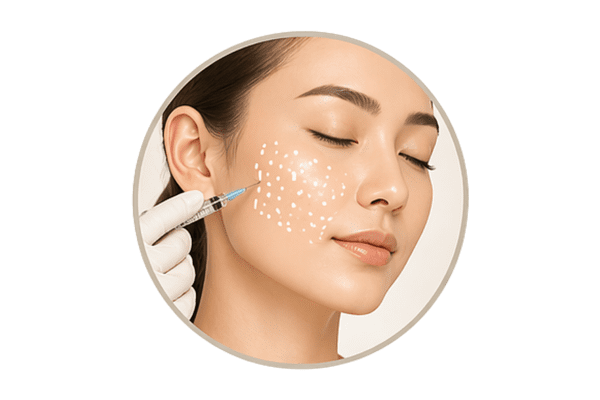
Skin concerns such as enlarged pores and oiliness are influenced by activity within the superficial layers of the skin.
When delivered in micro-doses, botulinum toxin acts on superficial nerve endings, helping to regulate oil production and improve skin texture.
Typical concerns include:
- Enlarged pores
- Excess oil production
- Uneven skin texture
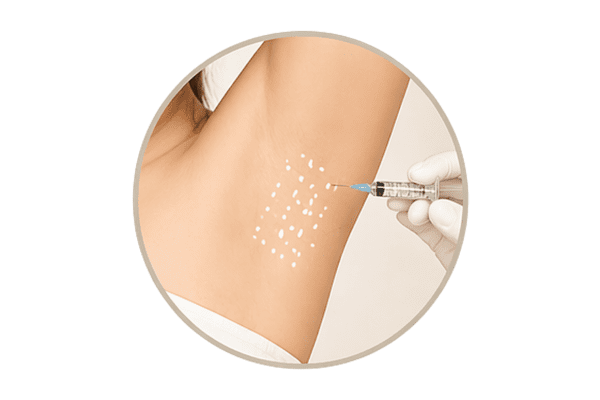
Excessive sweating occurs when sweat glands are overstimulated by nerve signals, even without heat or exertion.
Botulinum toxin works by blocking these signals, reducing the activation of sweat glands and controlling sweat production in targeted areas.
Treatment areas include:
- Underarms (axillary hyperhidrosis)
- Palms (palmar hyperhidrosis)
- Feet soles (plantar hyperhidrosis)
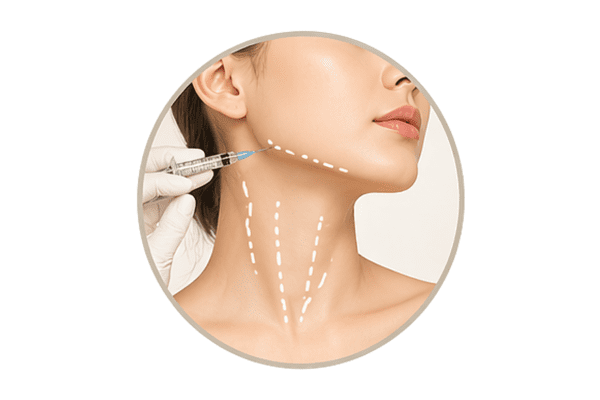
Muscle activity along the neck can contribute to downward pull and reduced definition of the lower face.
Botulinum toxin selectively relaxes these downward-pulling muscles, allowing the jawline to appear more lifted and defined.
Typical concerns include:
- Reduced jawline definition
- Visible neck bands
- Early lower face sagging

Chronic teeth grinding and jaw clenching are often driven by overactive masseter muscles.
Botulinum toxin reduces excessive muscle contraction by interrupting nerve signals, helping to relieve tension while maintaining normal jaw function.
Typical concerns include:
- Bruxism (teeth grinding)
- Jaw clenching and tightness
- Muscle fatigue or discomfort
Doctor's Expertise
Why Technique Matters In Botulinum Toxin Treatments
Botulinum toxin is a highly technique-dependent treatment, where results are influenced not just by the product used, but by how precisely it is planned and administered.
Factors such as injection depth, placement, and dosage all play a critical role in achieving natural-looking and balanced outcomes.
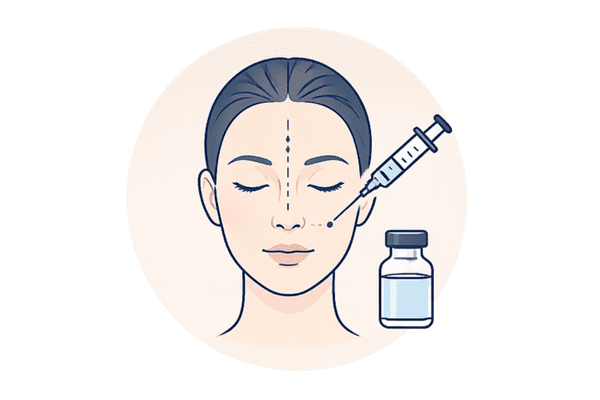
Precision & Dosage
Accurate placement and dosing determine how muscles respond to treatment. Poor technique can lead to stiffness, heaviness, or an unnatural appearance.
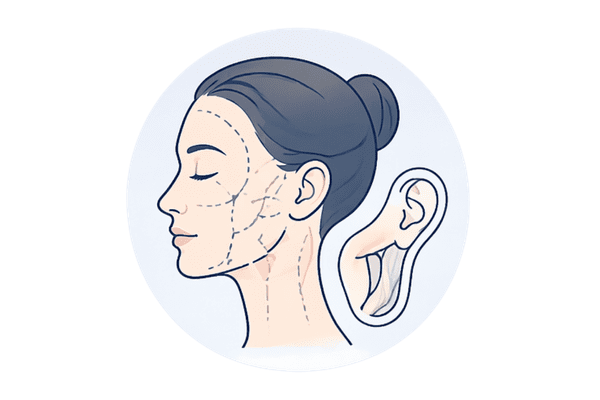
Facial Balance & Anatomy
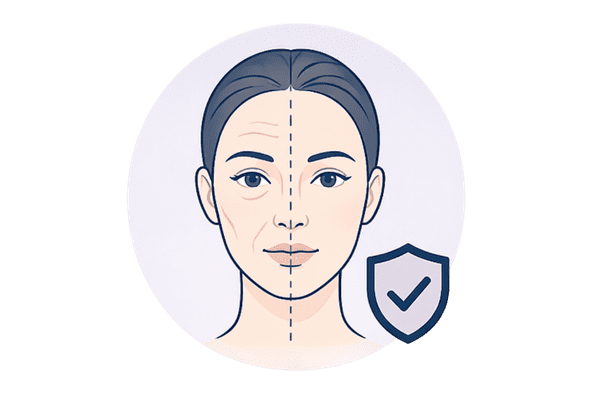
Botulinum toxin affects how different muscles interact across the face. A balanced, anatomy-led approach helps maintain natural proportions and avoid asymmetry.
Avoiding Over-Treatment
Excessive or repeated dosing can reduce natural muscle activity too much. A measured approach helps preserve expression while avoiding a flat or frozen look.
FAQ
frequently asked questions
Are botulinum toxin injections safe?
When administered by licensed medical professionals, botulinum toxin injections have a well-documented safety profile. As with any medical procedure, there are potential risks, such as temporary discomfort, bruising, or unintended effects on surrounding muscles. These risks may vary depending on individual factors and practitioner expertise.
It is important that such procedures are conducted in licensed medical clinics by healthcare professionals trained in facial anatomy and injectable techniques. Treatment decisions should be based on clinical evaluation, not cost considerations.
Does it hurt to get botulinum toxin injections?
Most individuals find botulinum toxin injections very tolerable. The procedure uses a fine needle, and the sensation is often described as a quick pinprick. While discomfort is generally minimal, topical numbing cream may be applied before treatment if preferred.
What are the potential side effects or downtime?
Some individuals may experience temporary side effects such as mild redness, tenderness, or bruising at the injection site, which typically resolves quickly.
Downtime is generally minimal, and many individuals resume normal activities shortly after, depending on personal response and treatment area.
When will I see results, and how long do the effects last?
Visible results typically begin to appear within 3 to 5 days after a botulinum toxin treatment.
The effects generally last around 4 to 6 months, depending on individual factors such as metabolism and muscle activity.
Overtime, our bodies naturally metabolizes the botox injection, leading to the slow return of muscle movement in the treatment area. Repeat treatments may be recommended to maintain desired effects, under medical supervision.
Can I receive botulinum toxin treatments if I’m pregnant or breastfeeding?
Botulinum toxin is generally not recommended during pregnancy or breastfeeding as a precautionary measure. This precaution is essential to safeguard the well-being of both the mother and the child, ensuring that potential risks or adverse effects are minimised during these critical stages of maternal and infant health.