
Pigmentation Treatment in Singapore
A layered approach to pigmentation, guided by pigment type, skin behaviour and long-term control
Introduction
Understanding Pigmentation
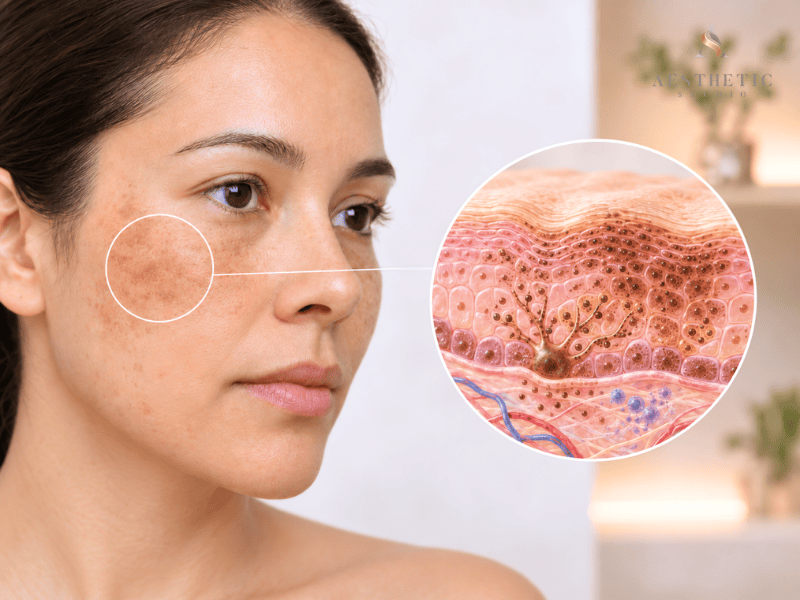
Pigmentation is a broad term for areas of skin that appear darker, uneven or discoloured, but the pigment we see at the surface can arise for very different reasons.
Melasma, sun spots, freckles, post-inflammatory hyperpigmentation and deeper dermal pigmentation may all present as brown, grey or uneven patches, yet they can differ in where the pigment sits, what is driving it and how the surrounding skin is behaving.
This is why our approach begins by looking beyond the colour itself. We consider the type of pigmentation, its depth, its pattern and the skin environment around it before deciding how it should be treated.
Rather than starting with a device, treatment is planned around the pigment we are trying to address — with each step chosen for a specific role, from correction and skin support to long-term maintenance.
Types
What Type of Pigmentation Do I Have?
Pigmentation can appear as patches, spots or marks in different shades of brown, grey or blue-grey. The pattern, distribution and timing can offer clues as to what type of pigmentation may be present.
Some pigmentation develops gradually with sun exposure, some follows inflammation or acne, while others are linked to deeper pigment cells in the skin. More than one type can also occur at the same time.
Melasma
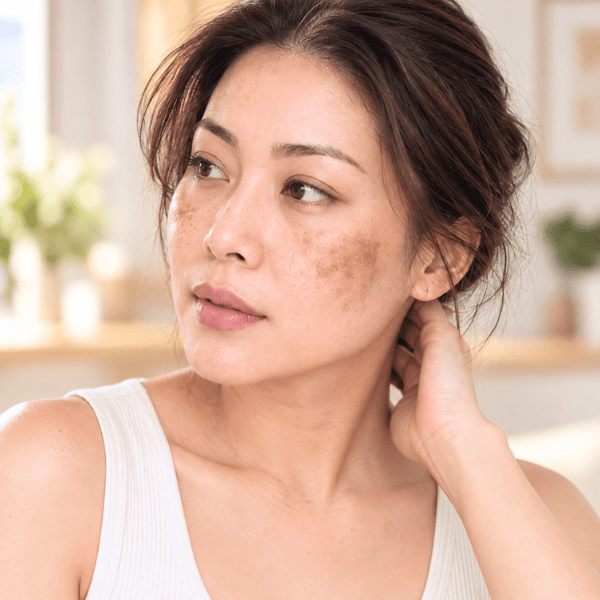
Melasma is a common type of facial pigmentation that usually appears as symmetrical brown or grey-brown patches across the cheeks, forehead, upper lip or jawline. Its appearance can change over time and is often influenced by sun exposure, heat and hormonal factors.
Sun Spots & Age Spots
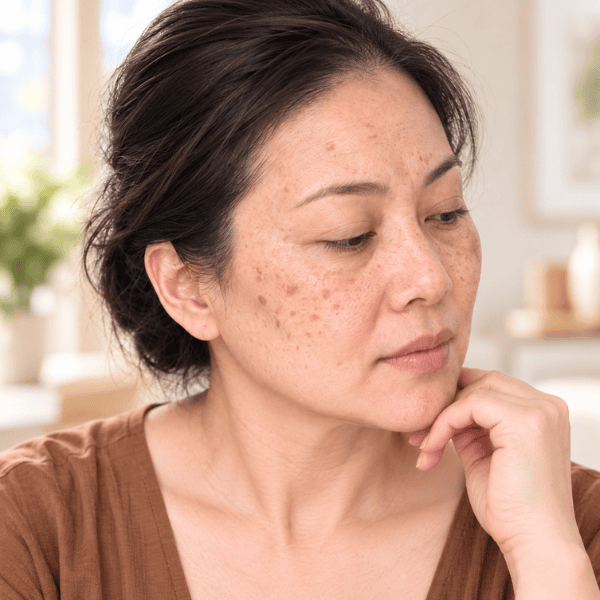
Sun spots, also known as solar lentigines, are flat, well-defined areas of pigmentation that develop gradually on sun-exposed skin. They are commonly seen on the face, hands and arms and tend to remain visible rather than fading completely between seasons.

Freckles
Freckles are small, light-brown areas of pigmentation that often become more noticeable with sun exposure. They commonly appear from a younger age and may lighten when sun exposure is reduced, although the tendency to develop freckles can remain over time.

Post-Inflammatory Hyperpigmentation
Post-inflammatory hyperpigmentation, or PIH, is pigmentation that develops after the skin has been inflamed or irritated. It is commonly seen after acne, eczema, injury or certain procedures and may appear as brown, grey-brown or darker marks where the inflammation occurred.
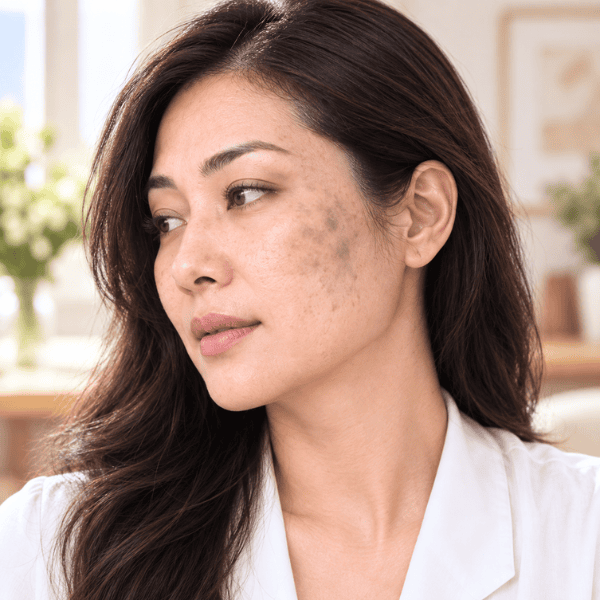
Hori’s Naevus
Hori’s naevus is a deeper form of facial pigmentation that typically appears as grey-brown or blue-grey spots on both cheeks, sometimes extending towards the temples or forehead. Its deeper location can make it look different from more superficial pigmentation.
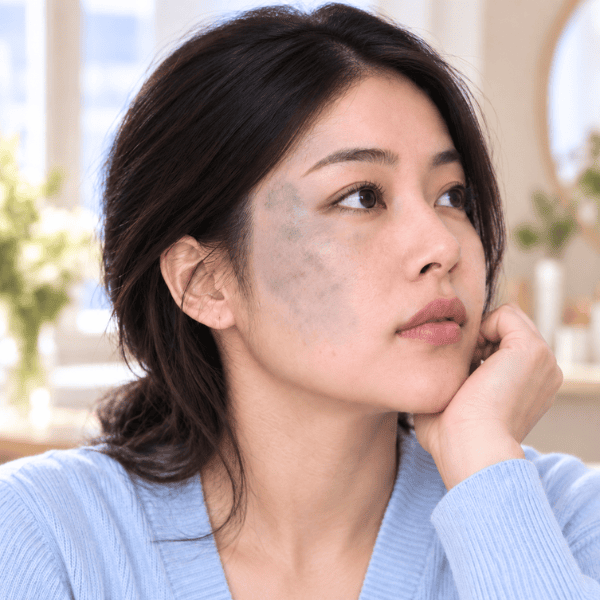
Naevus of Ota
Naevus of Ota is a deeper pigmentation condition that usually appears as blue-grey or brown-grey discolouration on one side of the face. It may be present from birth or develop later and can involve areas around the eye as well as the cheek.
Our Approach
A Multi-layered Approach to Pigmentation Treatment
Developed from Dr. Jonathan Lee’s clinical approach to pigmentation, our Pigment Architecture framework brings each stage of care into one considered plan — from preparation and correction to skin support and long-term maintenance. Not every patient needs every stage; each step is introduced only where it has a clear role in the treatment plan
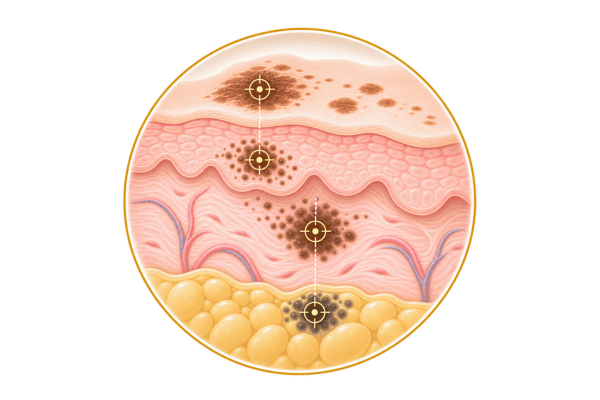
1. Map The Pigmentation
We assess the pigmentation pattern, likely depth, skin type, triggers and previous treatment response to define the treatment targets and plan the most appropriate sequence of care.
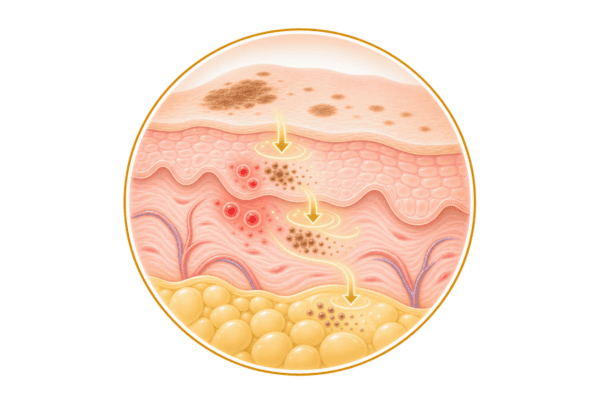
2. Stabilise Pigment Activity
Where inflammation, irritation or barrier disruption is contributing to pigment activity, we first work to calm the skin and reduce factors that may continue to stimulate pigmentation.
3. Prepare The Skin
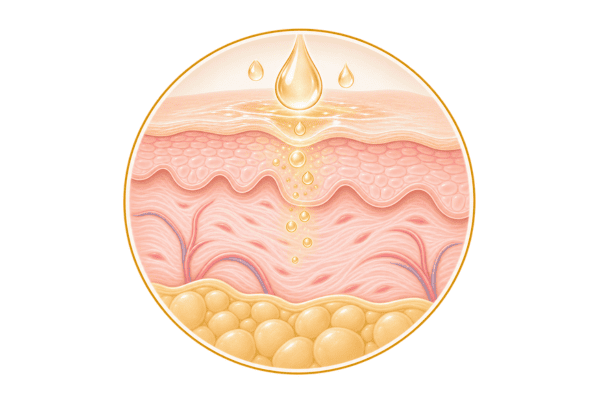
Selected skincare or medical topical treatments may be introduced to regulate pigment activity, support the skin barrier and prepare the skin for more targeted pigmentation treatment.
4. Correct Visible Pigmentation
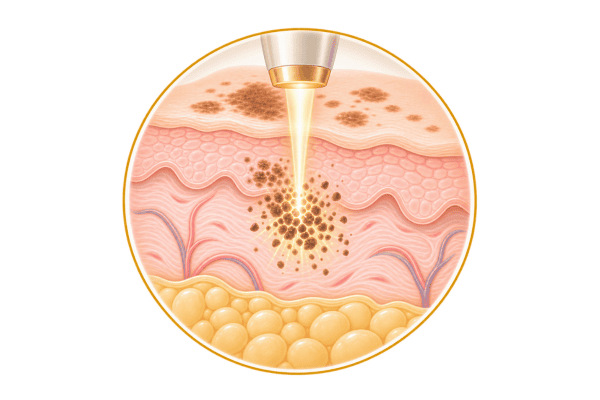
Corrective treatment is selected according to the pigmentation being treated and may include topical therapy, chemical peels, pigment-targeting lasers, light-based treatments or a combination approach.
5. Rebuild the Skin Environment
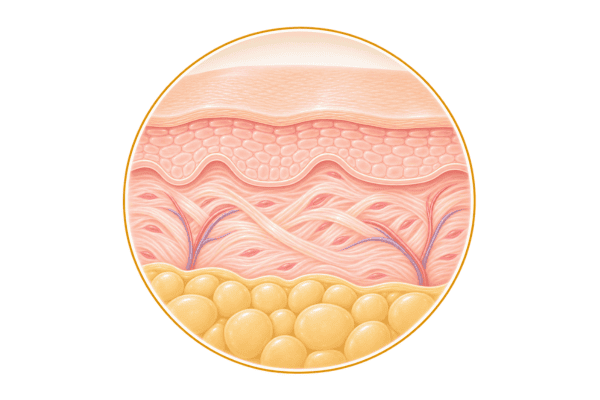
Where pigmentation sits alongside photodamage, uneven texture or reduced skin quality, treatment may also support collagen renewal and improve the surrounding skin environment.
6. Maintain Long-Term Results
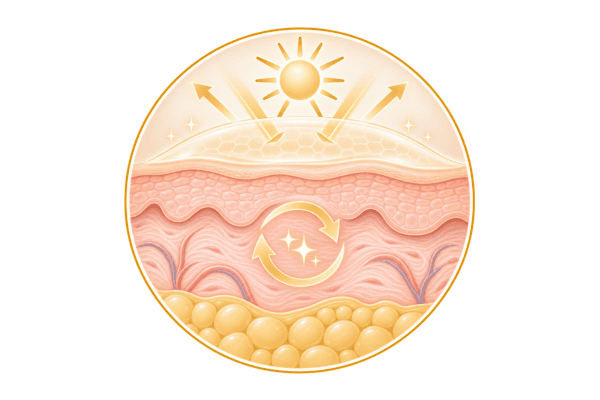
Long-term pigmentation control may include sun protection, maintenance skincare and periodic review to help reduce reactivation and preserve improvements over time.
Treatments
Treatment Options for Facial Pigmentation
Pigmentation treatment may involve different modalities, but the choice of treatment should always follow the needs of the skin and the pigment being addressed. Depending on the condition, this may include medical skincare, chemical peels, pigment-targeting lasers, light-based treatments, skin-rebuilding procedures or a combination approach.
The aim is not to use every treatment available, but to select the options that are relevant to the pigment being addressed and how the skin is behaving at that stage of care.
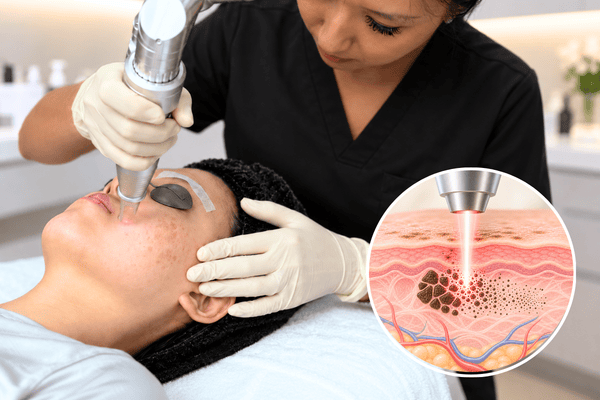
Picosecond Laser
Picosecond laser for pigmentation uses ultra-short pulses of energy to target melanin and break visible pigment into smaller particles. It is typically used when the treatment goal is precise pigment fragmentation with less emphasis on resurfacing the surrounding skin.
Treatment role:
- Visible melanin
- Pigment fragmentation
- Focused pigment correction
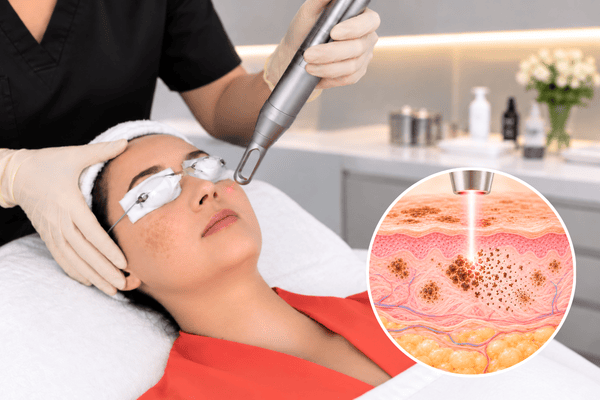
Q-Switched Laser
Q-switched laser for pigmentation delivers short, high-energy pulses that are absorbed by melanin within the skin. It can be used to target selected superficial or deeper pigment, with wavelength and settings adjusted according to pigment depth and skin response.
Treatment role:
- Melanin targeting
- Selected pigment depths
- Laser toning / correction
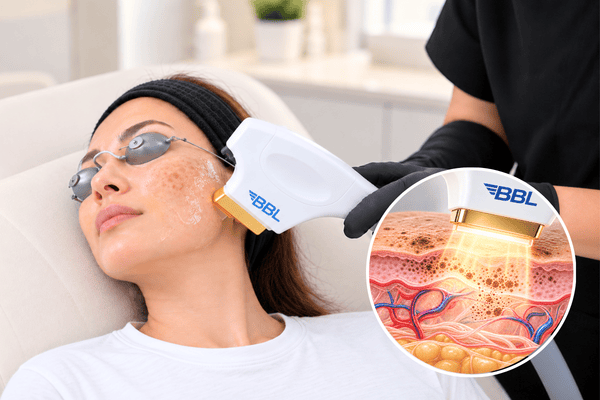
Broadband Light
BroadBand Light uses filtered light across a broader treatment area to target superficial brown pigment and sun-related discolouration. Unlike a focal pigment laser, BBL is particularly useful when pigmentation is more diffuse and accompanied by broader photodamage or uneven tone
Treatment role:
- Sun-related pigment
- Diffuse dark spots
- Photodamage & tone
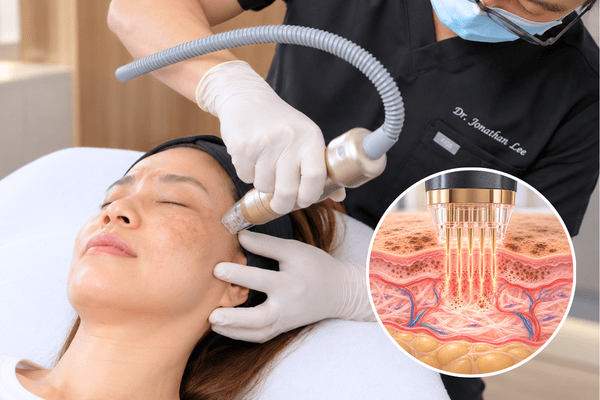
Sylfirm X
Sylfirm X uses pulsed-wave radiofrequency microneedling rather than directly fragmenting melanin with laser energy. In pigmentation treatment, its role can include addressing pigment activity, abnormal vascular signals and the skin environment associated with concerns such as melasma and post-inflammatory hyperpigmentation
Treatment role:
- Skin remodelling
- Regulate pigment activity
- Vascular / inflammatory signals
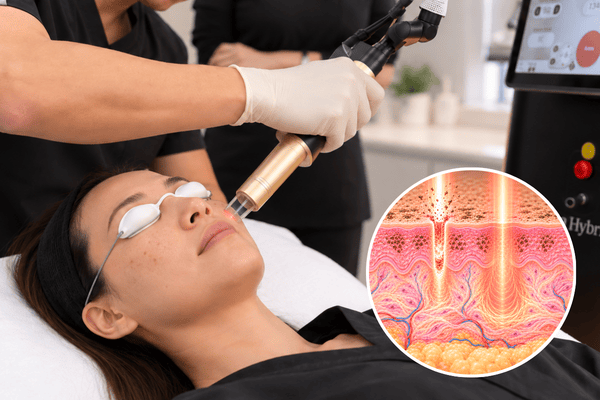
Alma Hybrid Laser
Alma Hybrid combines fractional CO₂ and non-ablative 1570 nm laser technologies, allowing resurfacing and deeper thermal remodelling to be customised within one treatment platform. Within a pigmentation plan, it is more relevant when pigment occurs alongside photodamage, uneven texture or broader skin-quality changes
Treatment role:
- Photodamage
- Fractional renewal
- Texture & skin quality
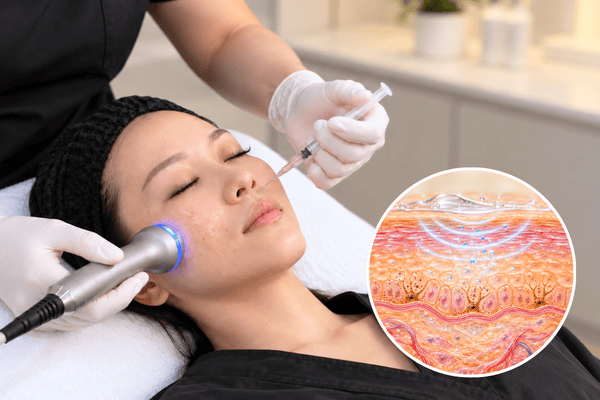
Lorient Element
Lorient Element is a topical skin booster formulated for pigmentation management, with ingredients including tranexamic acid, vitamin C, glutathione, niacinamide and hyaluronic acid. It can be incorporated into a pigmentation treatment plan to support pigment regulation, skin clarity and post-procedure skin recovery rather than acting as an energy-based pigment treatment itself.
Treatment role:
- Pigment regulation
- Post-treatment support
- Skin clarity & hydration
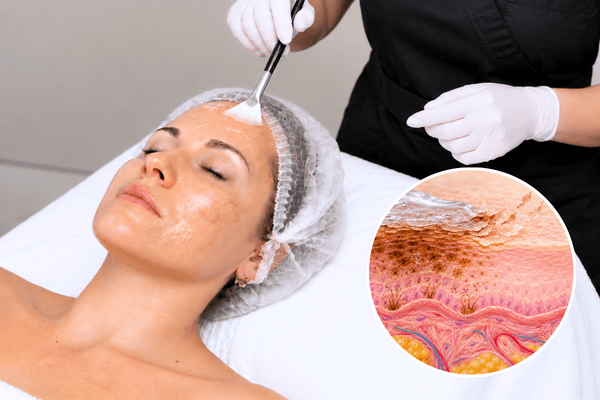
Chemical Peels
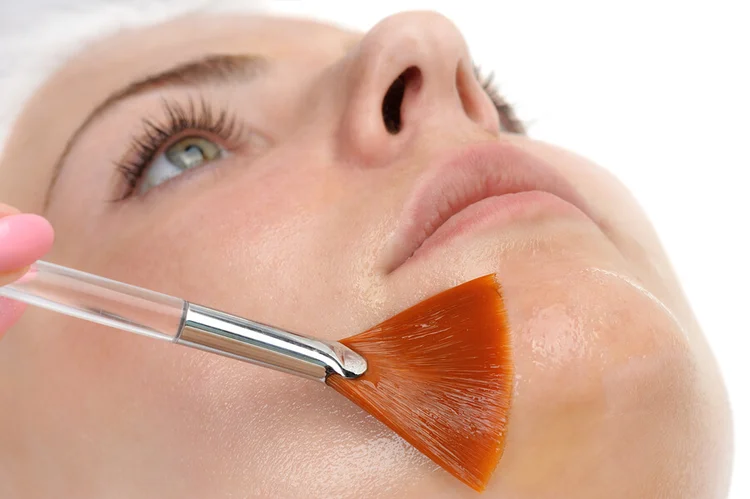
Chemical peels for pigmentation use controlled exfoliation to improve pigment closer to the skin surface and encourage more even skin turnover. They may be incorporated when superficial discolouration, post-inflammatory marks or uneven tone form part of the pigmentation pattern.
Treatment role:
- Surface pigmentation
- Skin tone refinement
- Controlled skin turnover
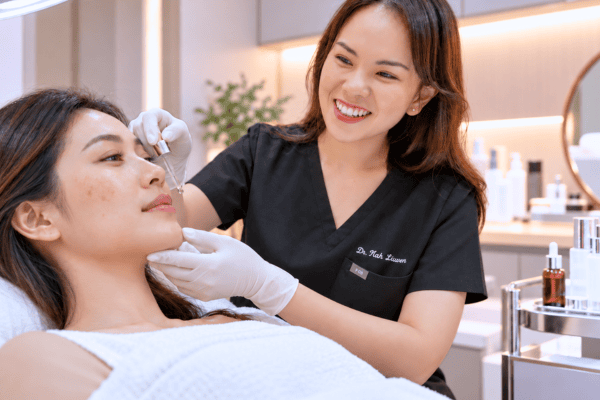
Medical Skincare & Topical Treatments
Medical skincare and topical pigmentation treatments can help regulate ongoing pigment production, support the skin barrier and maintain the skin between procedures. They often form the foundation of pigmentation management, particularly during preparation, maintenance or periods when active pigment needs to be controlled.
Treatment role:
- Pigment regulation
- Skin barrier support
- Preparation & maintenance
FAQ
Frequently Asked Questions About Pigmentation
What is the best laser for pigmentation?
There is no single laser that is best for every type of pigmentation.
Different lasers interact with pigment in different ways, and the appropriate choice depends on the type of pigmentation, its depth, your skin type and whether the pigment is active or stable.
A laser that may be suitable for a discrete sun spot, for example, may not be the most appropriate way to approach melasma or pigmentation caused by inflammation. Deeper dermal pigmentation may also require a different strategy from pigment sitting closer to the skin surface.
This is why we prefer to start with the pigment rather than with the machine. Once the target is understood, the technology can be selected for the job it needs to do.
What causes pigmentation on the face?
Facial pigmentation can develop for many reasons, including sun exposure, hormonal influences, inflammation, acne, irritation and the natural behaviour of pigment-producing cells in the skin.
Different conditions have different drivers. Melasma, for example, behaves differently from sun spots or pigmentation left behind after acne. Some pigmentation is predominantly superficial, while other forms involve pigment deeper in the skin.
It is also possible to have more than one cause of pigmentation at the same time. This is one reason a face can show several different shades or patterns of brown, grey or blue-grey pigmentation rather than one uniform condition.
Understanding what is contributing to the pigment helps us decide whether the priority should be correction, stabilisation, skin preparation, maintenance — or a combination of these.
What is the best treatment for pigmentation?
There is no single best treatment for every type of pigmentation. The most appropriate pigmentation treatment depends on what is causing the pigment, where it sits in the skin, how active it is and how your skin responds to treatment.
For example, a discrete sun spot may respond very differently from melasma, post-inflammatory hyperpigmentation or deeper dermal pigmentation such as Hori’s naevus. This is why pigmentation treatment may involve different tools — including medical skincare, chemical peels, pigment-targeting lasers, light-based treatments or a combination approach.
If you are unsure which category your pigmentation falls into, that is very common. You do not need to know the diagnosis before coming in. The role of the consultation is to identify the pattern first and then decide which treatment, if any, has a clear role.
Can pigmentation be removed permanently?
Some pigmentation can improve significantly, but it is not always realistic to think of pigmentation treatment as permanent removal.
The likelihood of recurrence depends on the condition. A treated sun spot may clear, but new spots can develop with future sun exposure. Freckles may darken again with ultraviolet exposure. Melasma is particularly prone to recurrence because the underlying tendency to produce pigment remains even after visible improvement.
For this reason, we usually separate two goals: correcting visible pigmentation and controlling the factors that may cause it to return.
A good pigmentation plan therefore does not end at the treatment itself. Sun protection, maintenance skincare and review may be just as important as the corrective treatment, particularly for pigment that is easily reactivated.
Can pigmentation come back after treatment?
Yes, some forms of pigmentation can return after treatment, while others may improve and then remain stable for long periods.
Whether pigmentation comes back depends largely on the condition. Melasma is known for recurrence. Freckles and sun spots can darken or new spots can form with continued sun exposure. Post-inflammatory pigmentation can recur if acne, eczema or irritation returns.
Recurrence does not necessarily mean the original treatment failed.
For many pigmentation conditions, treatment is better thought of as a combination of correction and control. Corrective treatment improves what is visible now, while sun protection, skincare and maintenance help manage the factors that may stimulate pigment again later.
Can pigmentation get darker after laser treatment?
Pigmentation can sometimes look temporarily darker after laser treatment, and in some cases the skin may develop post-inflammatory hyperpigmentation as part of its response to treatment.
This risk is one reason pigment-prone skin needs to be treated thoughtfully. Treatment intensity, skin preparation, aftercare and the type of pigmentation being treated can all influence the response.
A darker appearance immediately after treatment does not automatically mean something has gone wrong. Some pigment-targeting treatments can temporarily make treated spots look darker before they shed or fade.
However, if pigmentation becomes progressively darker, spreads beyond the treated area, or is accompanied by significant irritation, it should be reviewed rather than ignored. The important question is not simply whether the skin became darker, but why it did.
Why did my previous pigmentation treatment not work?
There are several reasons pigmentation may not improve as expected, and it does not always mean you need a stronger treatment.
Sometimes the pigment was deeper than initially thought. Sometimes more than one pigmentation condition is present. In other cases, inflammation, active melasma or another trigger may still be stimulating pigment while corrective treatments are being performed.
It is also possible for a treatment to improve one component of pigmentation while another remains visible.
If you have already tried lasers, peels or skincare without much improvement, that history is useful rather than discouraging. It tells us something about how your skin has behaved.
The next step is often to reassess the target rather than simply repeat the same treatment at a higher intensity.
What is the difference between pigmentation and melasma?
Pigmentation is a broad term used to describe areas of skin that appear darker than the surrounding skin, while melasma is one specific type of pigmentation.
Melasma commonly appears as symmetrical brown or grey-brown patches across the cheeks, forehead, upper lip or jawline. It can be influenced by sun exposure, visible light, heat, hormones and other biological factors, and it tends to behave as a recurrent condition.
Other forms of pigmentation include sun spots, freckles, post-inflammatory hyperpigmentation and deeper dermal pigmentation such as Hori’s naevus.
If you are looking at brown patches and are unsure whether they are melasma or another type of pigmentation, that uncertainty is completely reasonable. These conditions can overlap visually and can even coexist on the same face, which is why a consultation with our doctors is useful before deciding on treatment.
About This Page
Medically reviewed by Dr. Jonathan Lee, Aesthetic Physician & Consultant Surgeon · Last reviewed October 2026
This page provides evidence-informed medical information for general educational purposes and is not a substitute for individual medical advice. Treatment suitability and expected outcomes may vary between individuals and are best discussed during a consultation with a doctor.