

I’ve always had chubby cheeks. My round face is the result of Italian genetics, so says my mother. When I was younger I felt my face gave the impression that the rest of me was chubby too. And it might be said that my cheeks mirror what’s to come when you see me from behind! So I was always keen to do what I could to minimise them. I was shading and shaping long before the Kardashians came along and not half as well.
These days, my cheeks seem to have slid down my face somewhat and taken up residence under my chin and around my jawline. Or so it appears to me. Needless to say they are as unwelcome there as they were under my eyes. And this is where my foray into HIFU begins.
An acronym that stands for High Intensity Frequency Ultrasound, I first heard about HIFU at a school auction fundraiser. Going through the list of prizes to bid on I came across a session that could deliver a V-shaped face. Having spied one or two K-pop videos in my time cruising the electronic aisles in Giant, I had an idea what this meant. Naturally, I tended my bid. Unfortunately, my auction skills are amateur and I lost out, but the knowledge that there was a treatment in existence that could potentially sculpt my jawline stuck with me.
Since then, when I’ve stood in front of the bathroom mirror and sucked in my cheeks, it’s got me thinking – would I actually undergo a cosmetic procedure that essentially makes the wind change? More than a few times I’ve Googled Ultherapy and Ultraformer, the terms that the procedure and technology is interchangeably known as. Not one for facials or therapies with no residual effect, I’d never done anything like this before. But since you’re on this page, and this is the website for a leading Singapore Aesthetic Clinic, I guess you know what I did. So let me tell you all about it. Maybe I can give you some insight to decide if it’s the right thing for you.
First of all, I’ll cut to the chase and say that I’m happy with the results. They are not jaw-dropping (thankfully, really), but my jawline indeed looks and feels tighter. I still have a fold under my chin but it’s smaller than it was before and not as noticeable. And the contouring along my jawline is smoother where I had been noticing looser skin. All in all, I’m pleased with the outcome and, perhaps somewhat more importantly, the process that I underwent with Dr Lee at The Aesthetic Studio.
Because, it’s important to realise, results are only one aspect of the HIFU procedure to consider. There are obviously a lot of aesthetic clinics in Singapore offering Ultherapy, so how do you select the right one? With the benefit of hindsight I’d say, in addition to seeking a clinic that delivers positive outcomes, it’s worth weighing the pre-procedure process and understanding how the HIFU treatment is administered.
The Consultation
Obviously I came across Dr Lee because I was invited to try out treatments and write about my findings. So I wasn’t sure if my concerns would be front and centre of our discussions or if a signature treatment might be the hero. But as we chatted I discovered that Dr Lee wasn’t interested in directing me to a particular treatment. He wanted to know how I felt about my appearance and how he could use his toolbox to help.
As a mother who wants to empower her two daughters, I try not to get hung up on appearance. But I confessed to Dr Lee that my sagging face was getting me down. I understand that wrinkles and the like are a feature of my age but I hadn’t expected my face to disappear into my neck just yet. I was keen to give the two of them a time-out. I did go through a bit of a mind wrestle though about what kind of woman it makes me. Am I vain or a bad role model if I want to do things to my face? In the end, my desire for more confidence won out.
Dr Lee offered a range of options that might fit the bill between skin condition, budget, longevity, risk, time, and my crisis of conscience. With much sensitivity, honesty and skill, he examined the proportions of my face and gave me a few options before I settled on progressing with the Ultraformer HIFU treatment. I liked that it wasn’t invasive yet could achieve noticeable results with improvements to be expected over time. However, he prepared me for the fact that it was not a pain-free treatment. And this is an important thing to note. In my research after our appointment, I couldn’t find a lot of information about how much discomfort to expect with this procedure, so I appreciated his candour.
The Treatment
On the day of the HIFU procedure I rocked up to the clinic with quite a bit of excitement and an equal measure of anxiety. The nursing staff took some photos, then we waited for the numbing cream to take effect. A lifted face was only a few shocks away. Yes, shocks.
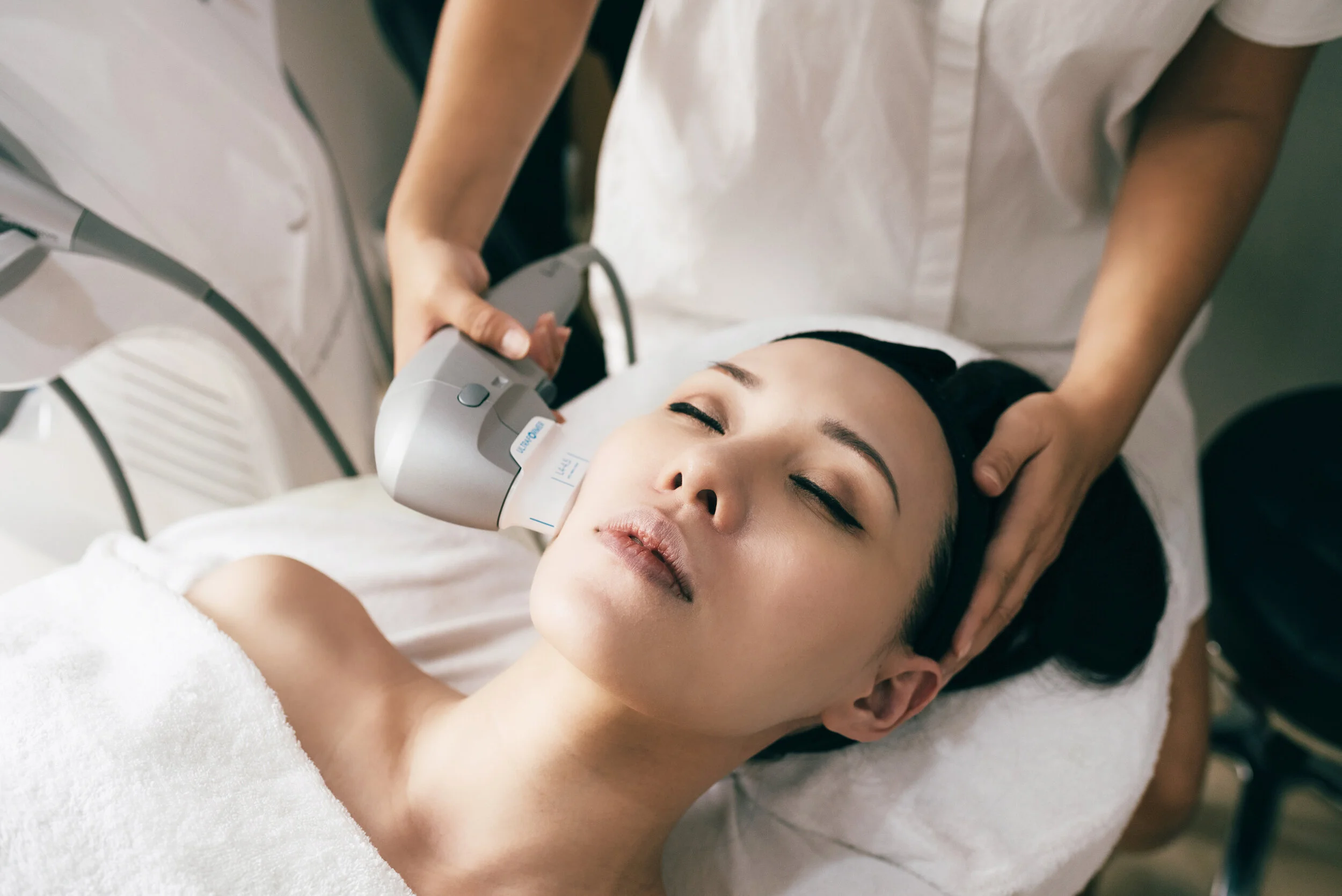
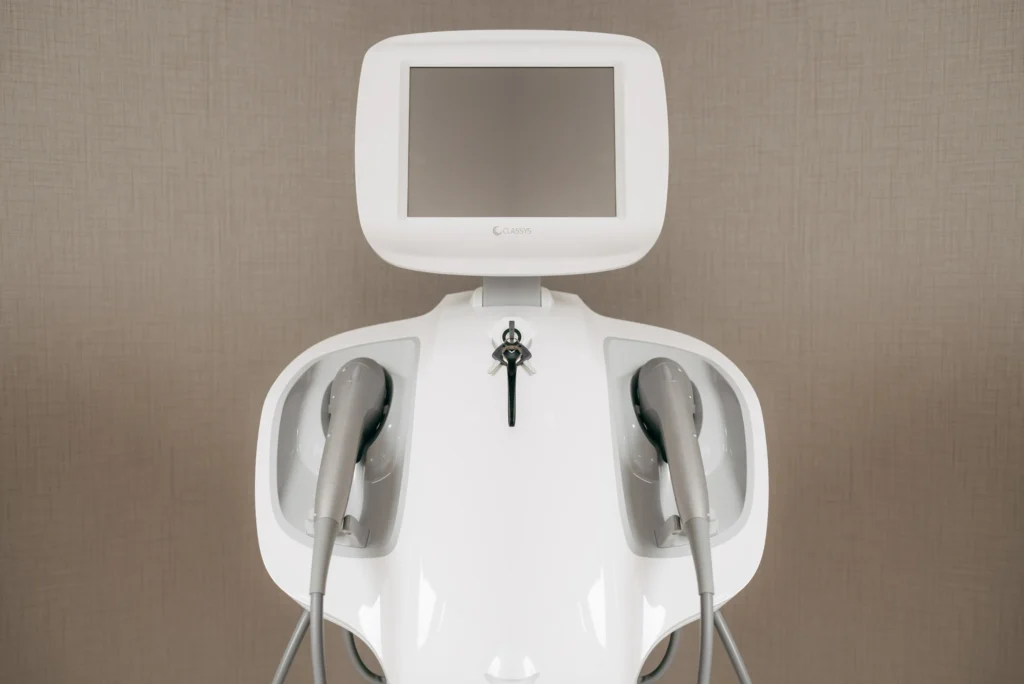
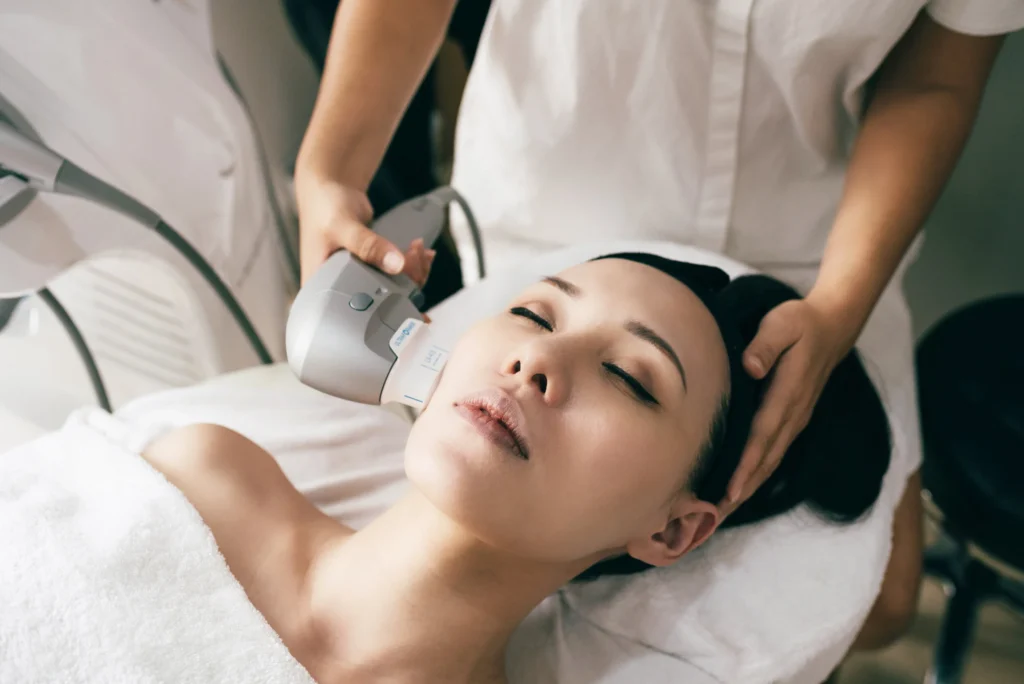
An Ultherapy treatment consists of a series of rapid bullet like pulses of HIFU energy that penetrate the skin at multiple depths. The shocks are administered via a transducer that is moved across the skin in a pattern that follows the contours of the face from the neck up to the eye area. The process can then be repeated to target different depths. All the while, the layers of the skin being treated can be monitored accurately through the Ultraformer MPT to determine exactly where the ultrasound waves are focused, making the procedure very safe and precise.
These shocks stimulate collagen and tighten the skin by targeting the SMAS (Superficial Musculo Aponeurotic System) layer of the face. This is the layer that surgeons pull and tighten to achieve a facelift. Which is why Ultherapy has gained such popularity – it can achieve some of what a facelift can without having to go under the knife. Hello, non-invasive beauty hack! But it did make me feel a little old to think I was about to undergo a workaround of what Jane Fonda has done (but I’m old enough to remember her work out videos so here we are).
Dr Lee got me comfortable and talked me through the procedure as he had done at my previous consultation. Once we began the procedure I duly noted that the numbing cream didn’t do a lot to diminish the discomfort and Dr Lee was right to remind me about what I might feel. In other words, if you have a low threshold for pain, this is probably not the right procedure for you. You can certainly achieve some pleasing results, but it will take some tolerance to get there.
If you are focused on taking action and don’t want to do anything more invasive, then prepare yourself with a coping strategy for this procedure. Mine consisted of laying on my arms and hands, wiggling my toes and counting, as the feeling oscillated between stinging, when it came to soft tissue (cheeks), and aching when it came closer to the bone (jawline). Luckily, Dr Lee’s nurses are experienced and they knew to help ease my discomfort by tapping parts of my body to distract me – a surprisingly effective technique.
The treatment took about 45 minutes and once it was over there was no residual pain. I could feel the numbing cream again and noticed I was a bit red and mildly swollen, but nothing that would make me feel too self conscious about walking out of the clinic and bumping into people. Dr Lee talked me through how the procedure went and told me I should start to see results in a few weeks, and then continue to see them improve up to about 3 months post-procedure. That’s when results tend to hit their peak, lasting for 6 to 12 months thereafter.
The Results
At my follow up appointment with Dr Lee we compared my before and after photos. Spoiler alert: I do not look 10 years younger. But nor do I look quite so jowl-y anymore either. I was pleased to see that the HIFU treatment had gently firmed up and tightened my lower face. We’re not talking an Angelina Jolie jawline or Keira Knightly cheekbones. Just a slightly enhanced version of me. And I’m pretty happy with that.
If you’re interested in tightening up skin on the lower third of your face I recommend booking a consultation with Dr Lee to discuss if HIFU is the right treatment for you.
Obviously I came across Dr Lee because I was invited to try out treatments and write about my findings. So I wasn’t sure if my concerns would be front and centre of our discussions or if a signature treatment might be the hero. But as we chatted I discovered that Dr Lee wasn’t interested in directing me to a particular treatment. He wanted to know how I felt about my appearance and how he could use his toolbox to help.
As a mother who wants to empower her two daughters, I try not to get hung up on appearance. But I confessed to Dr Lee that my sagging face was getting me down. I understand that wrinkles and the like are a feature of my age but I hadn’t expected my face to disappear into my neck just yet. I was keen to give the two of them a time-out. I did go through a bit of a mind wrestle though about what kind of woman it makes me. Am I vain or a bad role model if I want to do things to my face? In the end, my desire for more confidence won out.
Dr Lee offered a range of options that might fit the bill between skin condition, budget, longevity, risk, time, and my crisis of conscience. With much sensitivity, honesty and skill, he examined the proportions of my face and gave me a few options before I settled on progressing with the Ultraformer HIFU treatment. I liked that it wasn’t invasive yet could achieve noticeable results with improvements to be expected over time. However, he prepared me for the fact that it was not a pain-free treatment. And this is an important thing to note. In my research after our appointment, I couldn’t find a lot of information about how much discomfort to expect with this procedure, so I appreciated his candour.
The Treatment
On the day of the HIFU procedure I rocked up to the clinic with quite a bit of excitement and an equal measure of anxiety. The nursing staff took some photos, then we waited for the numbing cream to take effect. A lifted face was only a few shocks away. Yes, shocks.
An Ultherapy treatment consists of a series of rapid bullet like pulses of HIFU energy that penetrate the skin at multiple depths. The shocks are administered via a transducer that is moved across the skin in a pattern that follows the contours of the face from the neck up to the eye area. The process can then be repeated to target different depths. All the while, the layers of the skin being treated can be monitored accurately through the Ultraformer MPT to determine exactly where the ultrasound waves are focused, making the procedure very safe and precise.
These shocks stimulate collagen and tighten the skin by targeting the SMAS (Superficial Musculo Aponeurotic System) layer of the face. This is the layer that surgeons pull and tighten to achieve a facelift. Which is why Ultherapy has gained such popularity – it can achieve some of what a facelift can without having to go under the knife. Hello, non-invasive beauty hack! But it did make me feel a little old to think I was about to undergo a workaround of what Jane Fonda has done (but I’m old enough to remember her work out videos so here we are).
Dr Lee got me comfortable and talked me through the procedure as he had done at my previous consultation. Once we began the procedure I duly noted that the numbing cream didn’t do a lot to diminish the discomfort and Dr Lee was right to remind me about what I might feel. In other words, if you have a low threshold for pain, this is probably not the right procedure for you. You can certainly achieve some pleasing results, but it will take some tolerance to get there.
If you are focused on taking action and don’t want to do anything more invasive, then prepare yourself with a coping strategy for this procedure. Mine consisted of laying on my arms and hands, wiggling my toes and counting, as the feeling oscillated between stinging, when it came to soft tissue (cheeks), and aching when it came closer to the bone (jawline). Luckily, Dr Lee’s nurses are experienced and they knew to help ease my discomfort by tapping parts of my body to distract me – a surprisingly effective technique.
The treatment took about 45 minutes and once it was over there was no residual pain. I could feel the numbing cream again and noticed I was a bit red and mildly swollen, but nothing that would make me feel too self conscious about walking out of the clinic and bumping into people. Dr Lee talked me through how the procedure went and told me I should start to see results in a few weeks, and then continue to see them improve up to about 3 months post-procedure. That’s when results tend to hit their peak, lasting for 6 to 12 months thereafter.
The Results
At my follow up appointment with Dr Lee we compared my before and after photos. Spoiler alert: I do not look 10 years younger. But nor do I look quite so jowl-y anymore either. I was pleased to see that the HIFU treatment had gently firmed up and tightened my lower face. We’re not talking an Angelina Jolie jawline or Keira Knightly cheekbones. Just a slightly enhanced version of me. And I’m pretty happy with that.
If you’re interested in tightening up skin on the lower third of your face I recommend booking a consultation with Dr Lee to discuss if HIFU is the right treatment for you.