

Ozempic Face
Understand the Facial Changes After GLP-1 Weight Loss and What You Can Do About Them
Introduction
What Is Ozempic Face?
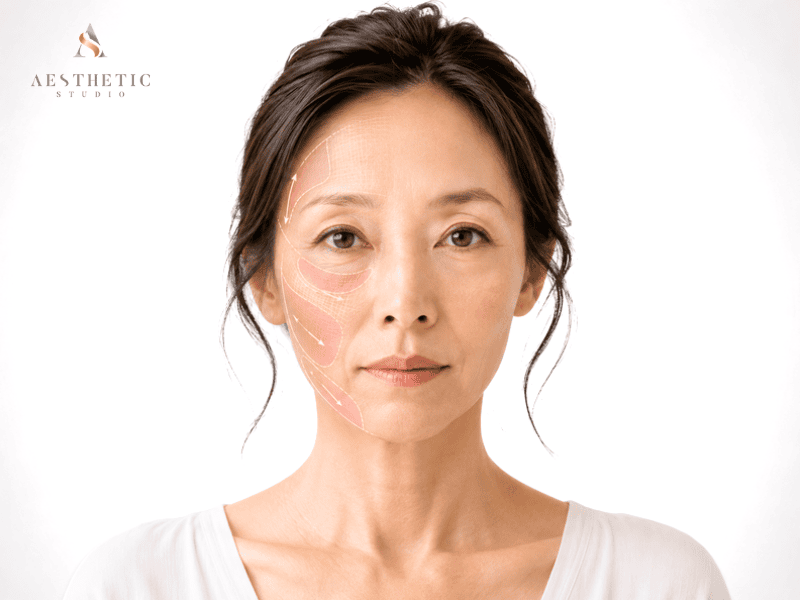
“Ozempic face” is an informal, non-medical term used to describe facial changes that may become noticeable after substantial weight loss, including weight loss supported by GLP-1-based medications. These changes can include hollowing around the temples or cheeks, deeper-looking under-eye shadows, reduced facial definition and skin that appears looser or less supported.
Despite its name, Ozempic face is not linked exclusively to one particular medication. Similar changes may be noticed following weight loss associated with Wegovy, Mounjaro, bariatric surgery or other methods. It is best understood as an umbrella term for several possible facial changes, rather than one specific condition that looks the same in everyone.
Causes
Why Does Ozempic Face Happen?
Ozempic face happens when rapid or significant weight loss reduces facial volume faster than the skin and supporting tissues can adapt. GLP-1 medications do not specifically target fat in the face. However, the weight loss they make possible can affect facial fat alongside fat elsewhere in the body, making existing hollows, laxity and signs of ageing more visible.
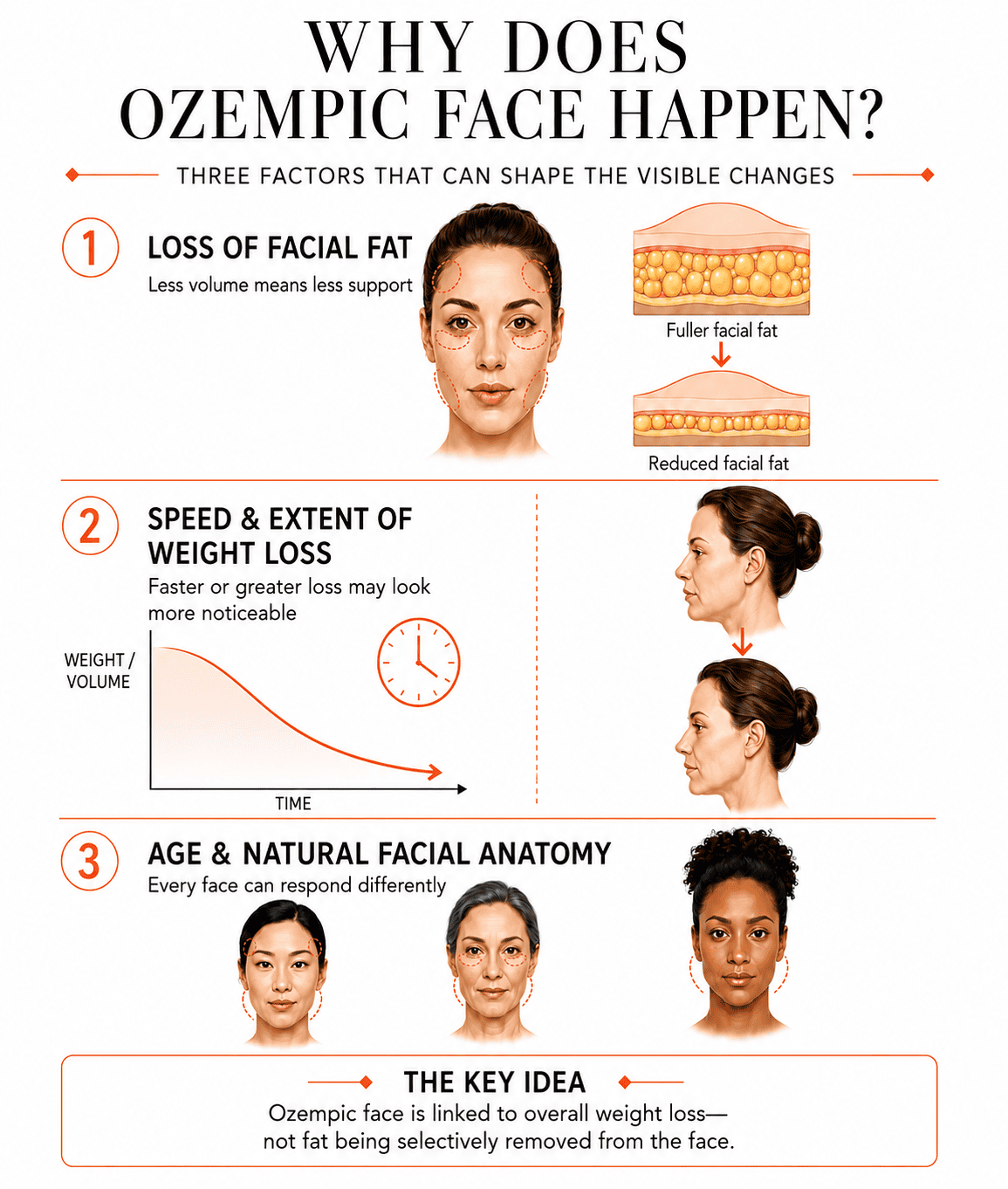
Loss of Facial Fat
Facial fat is not merely fullness. It also supports the contours around the temples, cheeks and under-eyes. When these fat compartments become smaller, the face may lose some of its underlying structure, causing previously smooth transitions between facial areas to appear more hollow or sharply defined.
The Speed and Extent of Weight Loss
The greater and faster the weight loss, the more noticeable the facial changes may be. When volume decreases over a relatively short period, the skin has less time to adjust to the face’s new contours. This is why Ozempic face is more closely associated with the pace and extent of weight loss than with one medication alone.
Skin and Collagen Support
After facial volume decreases, the skin must contract around a smaller underlying structure. Skin with good elasticity may adapt more readily, while skin with reduced collagen and elastic support may remain looser or appear less firm. Weight loss can therefore reveal skin-quality changes that were less apparent when the face was fuller.
Age and Natural Facial Anatomy
Every face begins from a different starting point. Age-related volume loss, naturally lean cheeks, thinner skin or pre-existing temple hollowing can all influence how the face responds. Two people may lose the same amount of weight yet look very different afterwards because their facial anatomy and tissue quality are not the same.
KEY SIGNS
What Does Ozempic Face Look Like?
Ozempic face commonly appears as a leaner, more hollow or less supported facial appearance following rapid or significant weight loss. The changes may affect several areas at once, making the face look more tired, drawn or aged even when the person feels healthier after losing weight.
Not everyone develops the same signs. How Ozempic face looks depends on where facial fat has reduced, how well the skin adapts and the person’s age and natural facial anatomy.

Hollow Temples
The temples may become noticeably more sunken as facial fat reduces during weight loss. This can make the upper face appear narrower and the brow and cheekbones look more prominent.

Flatter or Less Supported Cheeks
Previously fuller cheeks may appear flatter or less supported after weight loss. This loss of midface fullness can make the face look leaner, more angular or drawn.

Deeper Under-Eye Shadows
As volume reduces around the cheeks, the transition between the lower eyelids and midface becomes less seamless. Under-eye hollows and shadows can then look deeper, creating a more tired appearance.

More Noticeable Facial Folds
Folds between the nose and mouth may become more visible when the cheeks lose volume and support. This can make the central face appear more aged following significant weight loss.

A Softer Jawline and Early Jowling
The jawline may look less defined when reduced facial volume leaves the overlying skin and tissues with less support. Early jowling that was previously less noticeable may also become more apparent.

Loose-Looking Facial and Neck Skin
After rapid or substantial weight loss, the skin may not contract fully around the face’s smaller contours. It can appear looser, thinner or more finely creased around the cheeks, jawline and neck.
Treatments
Treatment Options for Ozempic Face
The best treatment for Ozempic face depends on how weight loss has affected the individual layers of the face. Some patients experience widespread facial deflation and reduced collagen support, while others are more concerned about hollow temples, flatter cheeks, skin laxity or fine creasing.
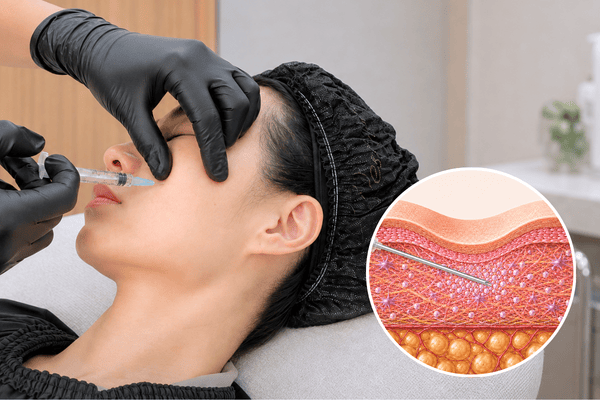
Collagen Biostimulators
Poly-L-lactic acid (PLLA-SCA) collagen biostimulators help restore facial support following GLP-1 medication-driven facial volume loss. PLLA-SCA stimulates collagen production gradually, making it suited to broader deflation across the cheeks, temples and facial contours.
GLP-1-focused research describes PLLA-SCA as a regenerative treatment for rebuilding facial structure and improving skin quality after significant weight loss.¹
Treatment at a Glance
- Best for generalised facial deflation
- Stimulates gradual collagen production
- Provides natural-looking support
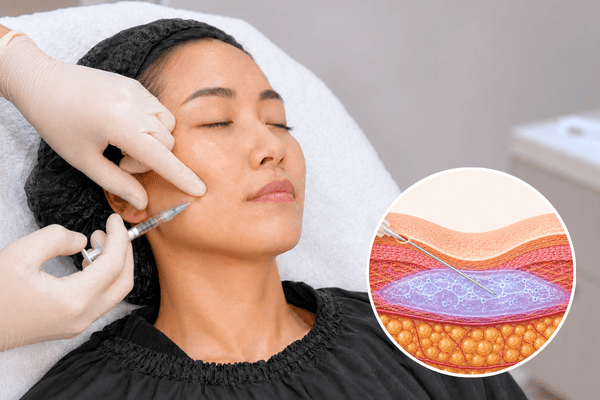
Hyaluronic Acid (HA) Fillers
Hyaluronic acid fillers may restore volume when GLP-1 medication-driven weight loss has created a localised concern—meaning volume loss concentrated in one specific facial area, such as the temples or cheeks. They provide precise, immediate correction, while broader facial deflation may be better suited to a collagen biostimulator.
A multicentre study found that a combined PLLA and HA filler treatment improved facial contours and skin quality in GLP-1 medication users.²
Treatment at a Glance
- Best for localised hollowing and volume loss
- Restores volume in selected facial areas
- Provides immediate, controlled correction
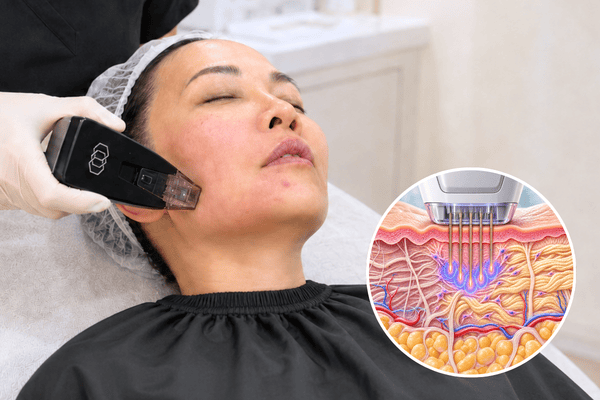
Morpheus8
Morpheus8 may be considered when skin laxity or fine creasing is one aspect of Ozempic face following GLP-1 medication-driven weight loss. It supports collagen remodelling but does not replace lost facial volume, so it may form one part of a personalised treatment plan rather than being suitable for every concern.
GLP-1-specific guidance includes radiofrequency-based treatments among several options for improving facial and neck skin laxity.³
Treatment at a Glance
- Best for skin laxity and reduced firmness
- Supports collagen remodelling
- Progressively improves skin texture
FAQ
Frequently Asked Questions About Ozempic Face
Is Ozempic Face a permanent condition?
Ozempic face is not automatically permanent, but some changes may persist.
Some facial changes may soften once weight, hydration and nutrition have stabilised, and the skin may continue adapting as the body adjusts after weight loss. Hydration can improve the skin’s appearance, although it cannot replace deeper facial volume.
In our doctors’ clinical assessment, persistent hollowing, volume loss and loose or creased skin can often be improved with a treatment plan tailored to what has changed. Restoring facial support and improving skin firmness require different approaches, so each area should be assessed carefully to achieve a balanced, natural-looking result.
Is Ozempic face an official medical side effect?
No. “Ozempic face” is an informal term, not a medical diagnosis or an adverse reaction officially listed under that name. It describes facial hollowing, volume loss or looser-looking skin that some people notice after substantial weight loss with Ozempic or another GLP-1-based medication.
Current evidence suggests that these changes are associated mainly with overall weight loss and the way facial tissues respond — not with one medication brand specifically damaging the face.
Is Ozempic face exclusive to one medication?
No. Similar facial changes can occur following substantial weight loss associated with different prescription weight-management medications. They may also occur after significant weight loss achieved without medication.
The informal term “Ozempic face” is widely used, but the changes appear to be associated more closely with overall weight loss and the way an individual’s facial tissues respond than with one particular medicine.
Should I wait until my weight is stable before seeking advice?
You do not need to wait until your weight is completely stable before seeking advice. An early consultation can identify whether the main concern is volume loss, skin laxity or a combination of changes.
A stable or predictable weight often makes longer-term treatment planning more reliable. If weight loss is continuing, our doctors may recommend monitoring the face or taking a conservative, staged approach to reduce the risk of overcorrection or results changing with further weight loss.
Does everyone taking GLP-1 medications develop Ozempic face?
Not everyone taking GLP-1-based medication develops noticeable facial changes, and it is not currently possible to predict exactly who will experience them.
Research suggests that greater overall weight loss is associated with greater facial volume loss. In our doctors’ clinical assessment, the speed of weight loss may also affect how noticeable the changes appear. Age, baseline facial volume, facial anatomy, genetics, skin quality and natural skin elasticity should all be considered, but none can reliably predict the outcome on its own.
Are "Wegovy face" and "Mounjaro face" the same as Ozempic face?
“Wegovy face”, “Mounjaro face” and “Ozempic face” are informal online terms for similar facial changes following substantial weight loss. They commonly refer to facial hollowing, reduced volume, less-defined contours or looser-looking skin — not separate medical conditions with distinct appearances.
How these changes appear varies from person to person. In our doctors’ clinical assessment, the amount and speed of weight loss, age, baseline facial volume, facial anatomy and skin elasticity are generally more relevant than the particular term used.
Can weight loss without medication cause the same facial changes?
Yes. Facial hollowing, reduced volume and skin laxity can occur after significant weight loss, whether it is achieved through medication, dietary changes, bariatric surgery or another medically supervised approach.
The term “Ozempic face” focuses attention on one medication, but the underlying changes are not unique to medication-assisted weight loss.
Medical References
- Franco J, Aguilera SB, Le JHT, Meckfessel M. Poly-L-lactic acid as a regenerative treatment for the glucagon-like peptide-1 receptor agonist user population. Dermatologic Surgery. 2026;52(6S):S10–S15. View study on PubMed
- Lorenc ZP, Somenek M, Nguyen TQ, et al. A multicenter, open-label study of combined poly-L-lactic acid and hyaluronic midface filler regimen enhances facial harmony and skin quality in GLP-1 medication users. Aesthetic Surgery Journal. 2026;46(5):509–519. View published study
- Moradi A, Denkova R, Holcomb K, Rossi A, Ashourian N. Nonsurgical aesthetic treatment of the face and neck in GLP-1 receptor agonist weight-loss patients: experience-based considerations. Aesthetic Surgery Journal Open Forum. 2026;8:ojag011. View published guidance