
Stretch Marks
Understand the biology behind stretch marks and explore evidence-based treatment options that improve their appearance
Introduction
What Are Stretch Marks?
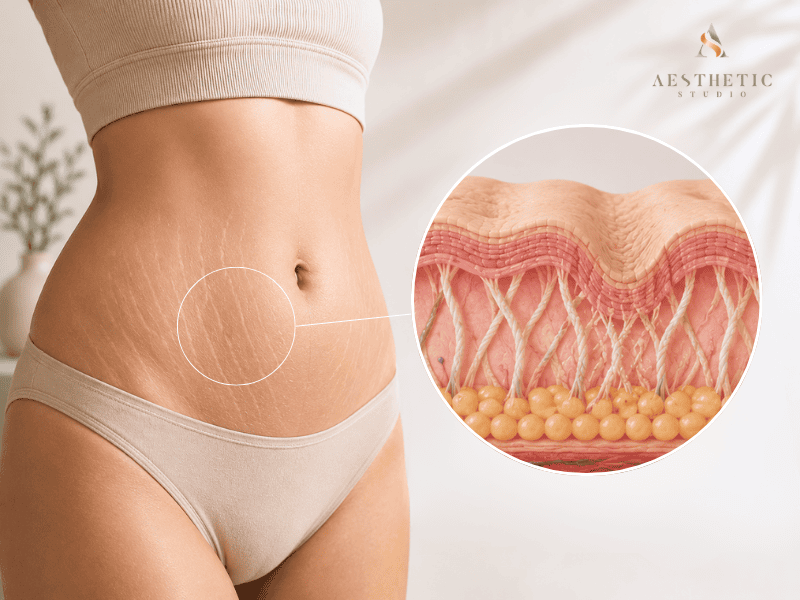
Stretch marks are a common skin concern that develop when the skin stretches or shrinks rapidly, causing microscopic tears within the dermis. As the skin heals, these changes can leave behind narrow, linear marks that vary in colour, texture, and appearance over time.
Although stretch marks are often associated with pregnancy, they may also develop during periods of rapid growth, weight changes, muscle gain, or hormonal fluctuations. They can affect both men and women and most commonly appear on the abdomen, thighs, hips, buttocks, breasts, and upper arms.
While stretch marks are harmless and do not pose a medical concern, many individuals seek stretch marks treatment to improve their appearance. Because they originate from structural changes beneath the skin rather than the surface alone, treatment approaches often focus on stimulating collagen remodelling and supporting healthier skin architecture to gradually improve their appearance.
Causes
What Causes Stretch Marks?
Collagen and Elastin Disruption
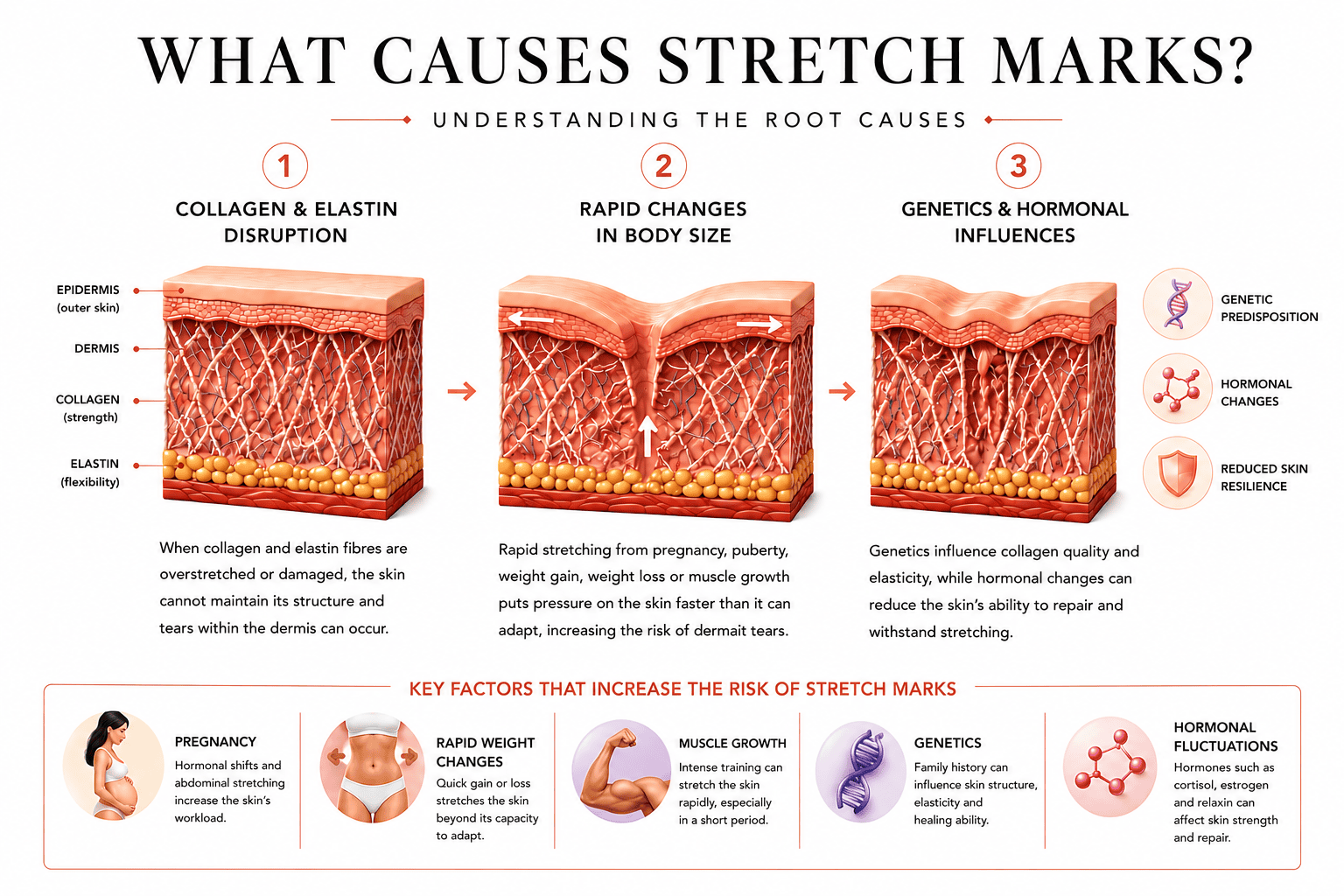
Stretch marks develop when the skin’s supporting proteins are unable to withstand excessive stretching. Collagen provides structural strength, while elastin allows the skin to stretch and recoil. When these fibres become disrupted, the skin heals by forming stretch marks rather than restoring its original structure.
Rapid Changes in Body Size
Rapid changes in body size place increasing demands on the skin’s ability to expand. Pregnancy, puberty, rapid weight gain, weight loss, and muscle growth are among the most common triggers because they stretch the skin faster than it can naturally adapt.
Genetics and Hormonal Influences
Individual susceptibility also plays an important role. Genetics influence collagen quality, skin elasticity, and the skin’s ability to tolerate stretching, while hormonal changes may reduce the skin’s resilience. As a result, some people are naturally more prone to developing stretch marks than others, even when exposed to similar physical changes.
Types
Red vs White Stretch Marks
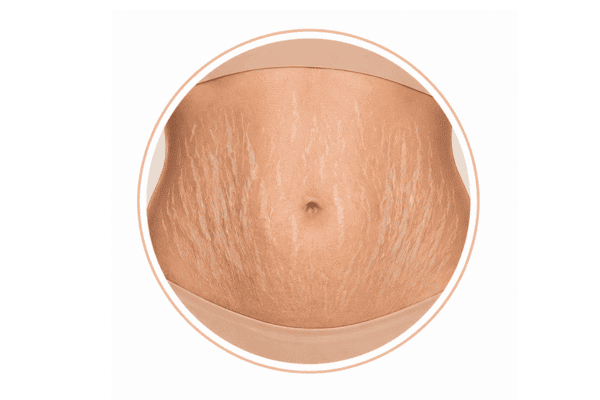
Stretch marks change in appearance as they mature. Newly formed stretch marks are typically red, pink, purple, or dark brown depending on skin tone, while older stretch marks gradually become lighter and less noticeable over time. Understanding the difference between these stages is important because it may influence the treatment approach and expected outcomes.
Red Stretch Marks (Striae Rubrae)
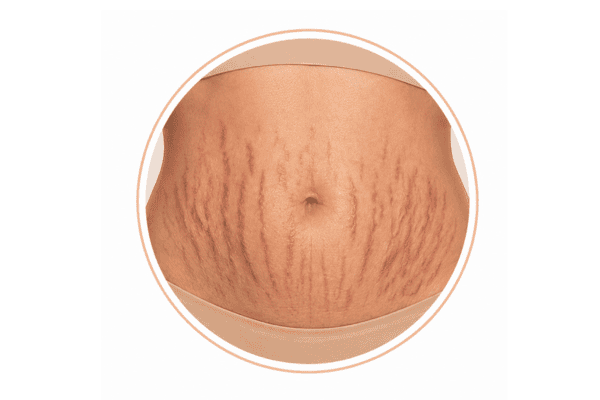
Red stretch marks represent the earliest stage of stretch mark development. They appear when the skin is still undergoing active healing following rapid stretching, giving them a red, pink, purple, or brown appearance depending on skin tone. At this stage, the skin is still actively remodelling, making early treatment an important consideration.
Key Characteristics:
- Red, pink, purple, or reddish-brown in colour
- Active inflammation and increased blood vessels beneath the skin
- Responds well to early care and laser treatments
White Stretch Marks (Striae Albae)
White stretch marks represent the mature stage of stretch mark development. As the skin completes its healing process, the marks gradually fade and become white or silver, reflecting long-standing structural changes within the dermis. Although they require a different treatment approach, they can still be improved with appropriate collagen-remodelling treatments.
Key Characteristics:
- White, silver, or lighter than the surrounding skin
- Long-standing collagen loss and dermal thinning
- Requires deeper collagen remodelling and dermal support
Treatments
Choosing The Right Stretch Marks Treatment
No two cases of cellulite are exactly alike. While one person may be concerned about skin laxity, another may have deeper skin depressions caused by fibrous connective tissue bands. Understanding these differences allows treatments to be tailored to your individual concerns.
Collagen Biostimulators
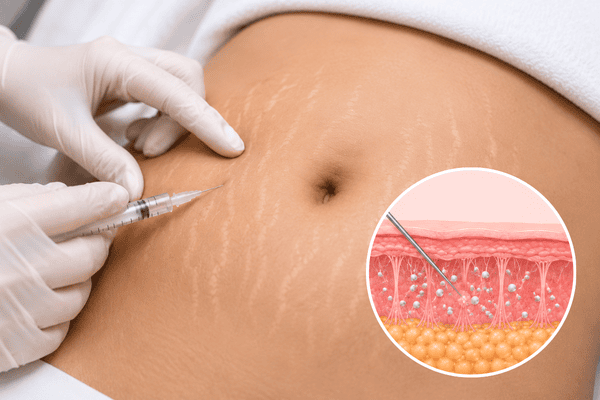
Injectable collagen biostimulators such as Sculptra® stimulates your body’s natural collagen production over time. Rather than resurfacing the skin, it gradually strengthens the dermal framework, improving skin thickness, elasticity, and support. It is particularly valuable where collagen loss contributes to the appearance of mature stretch marks.
Best suited for:
- Mature white stretch marks
- Stretch marks with skin thinning or collagen loss
- Improving overall skin quality and dermal supportpport
Fotona LineLase™
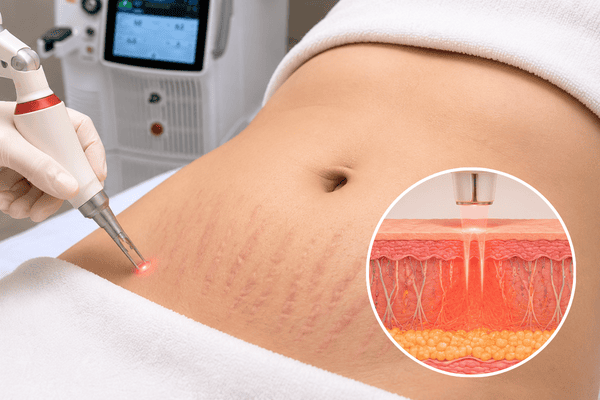
Fotona LineLase uses dual-wavelength laser technology to improve the appearance of stretch marks through both collagen stimulation and gentle skin resurfacing. By combining deep dermal remodelling with controlled renewal of the skin’s surface, it helps soften stretch marks, improve texture, and encourage a smoother, more even skin appearance.
Best suited for:
- Early and mature stretch marks
- Improving stretch mark colour and texture
- Collagen stimulation with gentle skin resurfacing
Multifrax Digital Peel
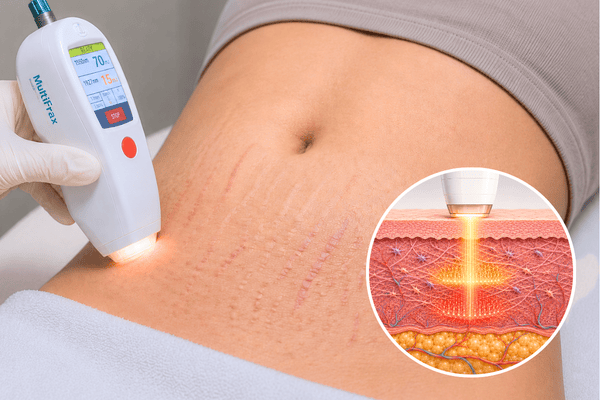
Multifrax is a non-ablative fractional laser that creates controlled microscopic treatment zones to stimulate collagen remodelling while preserving the surrounding skin. By encouraging gradual skin renewal, it helps improve the texture and appearance of stretch marks with minimal downtime, making it suitable for selected patients with less established stretch marks.
Best suited for:
- Early red stretch marks
- Mild to moderate stretch marks
- Improving skin texture with minimal downtime
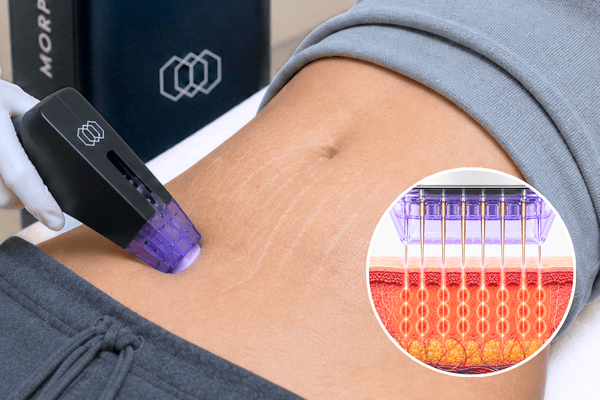
Morpheus8
Morpheus8 combines radiofrequency energy with microneedling to stimulate collagen remodelling deep within the skin. By improving dermal support, skin firmness, and elasticity, it helps soften the appearance of stretch marks while addressing mild skin laxity that may contribute to an uneven skin texture.
Best suited for:
- Stretch marks with mild skin laxity
- Reduced skin firmness
- Deep collagen remodelling
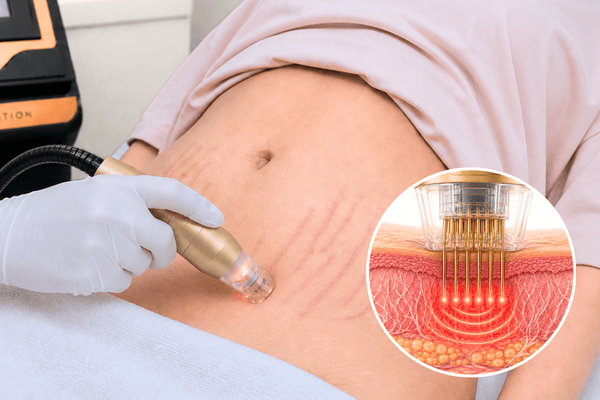
Sylfirm X
Sylfirm X combines pulsed radiofrequency with microneedling to stimulate collagen production while supporting the skin’s natural repair processes. It helps improve skin quality and dermal regeneration, making it particularly useful for selected patients with newer stretch marks and early structural skin changes.
Best suited for:
- Early red stretch marks
- Improving skin quality
- Supporting collagen regeneration
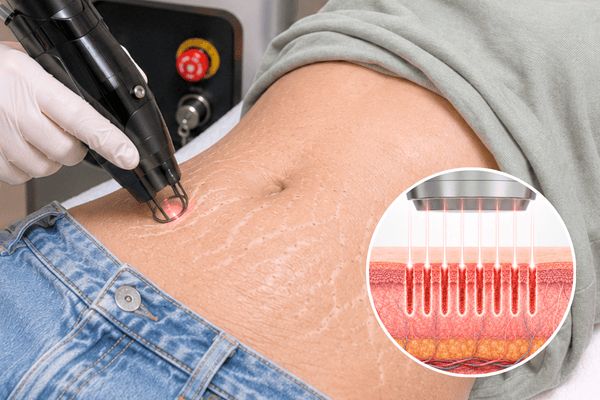
Fractional eCO2
Fractional eCO2 is an ablative fractional laser that resurfaces the skin while stimulating significant collagen remodelling beneath the surface. By promoting skin renewal and dermal repair, it helps improve the texture and appearance of more established stretch marks where deeper structural changes are present.
Best suited for:
- Mature white stretch marks
- Moderate to severe stretch marks
- Deeper textural irregularities
FAQ
Frequently Asked Questions About Stretch Marks
What Is the Best Stretch Marks Treatment?
There is no single “best” stretch marks treatment because stretch marks vary between individuals. The most appropriate treatment depends on several factors, including whether the stretch marks are red or white, their severity, skin quality, collagen loss, skin thinning, and the presence of skin laxity.
For example,Multifrax may be recommended for newer stretch marks and improving skin texture, while Fractional eCO₂ may be considered for more established white stretch marks requiring deeper skin resurfacing.
Collagen biostimulators such as Sculptra® may help improve skin quality and dermal support where collagen loss and skin thinning contribute to the appearance of stretch marks, while Sylfirm X and Fotona LineLase™ may be suitable for selected patients requiring collagen stimulation, skin tightening, and overall skin remodelling.
A personalised assessment is important because many patients achieve the best outcomes by combining different treatment technologies rather than relying on a single procedure.
Can Pregnancy Stretch Marks Be Treated?
Yes. Pregnancy stretch marks can often be treated once your body has recovered after childbirth and it is medically appropriate to begin treatment. The most suitable approach depends on whether the stretch marks are newly formed or mature, as well as your skin quality and treatment goals.
During your consultation, our doctors will recommend a personalised treatment plan based on your individual assessment.
Can Stretch Marks Be Removed Permanently?
For many patients, stretch marks can become significantly less noticeable with the right treatment approach. While complete removal is not usually possible, technologies that stimulate collagen remodelling and improve skin quality can soften their appearance, improve skin texture, and help stretch marks blend more naturally with the surrounding skin.
Clinical studies have demonstrated that modern stretch marks treatments can produce significant improvements in their appearance, although outcomes vary depending on factors such as whether the stretch marks are red or white, their severity, skin quality, and the treatment selected.
Can Laser Treatment Improve Stretch Marks?
Yes. Laser treatments are among the most commonly recommended options for improving stretch marks. They work by stimulating collagen remodelling, encouraging skin renewal, and improving overall skin texture and quality.
In general, newer red stretch marks often respond more readily to laser treatmentS because the skin is still undergoing active healing. More mature white stretch marks, on the other hand, often require treatments that focus on deeper collagen remodelling and skin resurfacing, such as Sculptra or Fractional eCO2 to help improve dermal support and skin quality.
Can Stretch Marks Come Back After Treatment?
Stretch marks that have responded to treatment do not usually return because they have already undergone collagen remodelling and structural improvement.
However, new stretch marks may develop if the skin is subjected to further rapid stretching, such as during pregnancy, significant weight changes, muscle growth, or certain hormonal changes.
Maintaining a stable weight and supporting long-term skin quality may help reduce the risk of developing new stretch marks. During your consultation, our doctors can also discuss strategies to help preserve your treatment results over time.
What Is the Difference Between Red and White Stretch Marks?
Red stretch marks (striae rubrae) represent the early stage of stretch mark development. They typically appear red, pink, purple, or brown depending on skin tone because the skin is still undergoing active healing and collagen remodelling.
White stretch marks (striae albae) are the mature stage and gradually become lighter as the healing process slows, reflecting longer-standing structural changes within the skin.
In general, red stretch marks are often more responsive to treatment because collagen remodelling is still active. White stretch marks can also be improved, but they usually require a more individualised treatment approach and, in some cases, additional treatment sessions to achieve visible improvement.